Why the first burn needs to be slow, what temperature to hold, and what to absolutely avoid doing the first time.
Seasoning a kamado: on the first burn, hold 120 to 150°C for an hour, then 200 to 230°C for half an hour, then let it cool completely. That protects the glaze and gasket — from the second time on, you can use the full temperature range.
A new ceramic grill shouldn’t start with a 320°C pizza burn. The first burn determines how long the gasket and glaze last — and it takes less than two hours.
Why seasoning matters at all
Ceramic and glaze expand at different rates when heated. An immediate jump to high temperature puts all of that stress into the material at once. Then there’s the fiberglass gasket: it seats itself on first heating and seals tight afterward — if you give it the time to do so. Going full blast the first time risks exactly the two parts that make a kamado what it is.
Seasoning a kamado: the process
1. Assemble the grill fully, insert the heat deflectors, fill the firebox only about a third full.
2. Light it and open both vents wide until the charcoal is fully lit.
3. Settle at 120–150°C and hold that temperature for an hour, lid closed.
4. Then slowly move up to 200–230°C and hold for another 30 minutes.
5. Close both vents and let the grill cool completely — never help it along with water.
From the second burn on, you can use the full temperature range.
Seasoning a kamado: what not to do
No water and no dish soap inside: ceramic is porous, absorbs both, and releases them the next time it heats up — soap onto your food, water as steam pressure into the material. And no petroleum-based firelighters; the smell embeds itself in the ceramic. Wood or wax firelighter cubes are the right choice.
What makes the first time easier
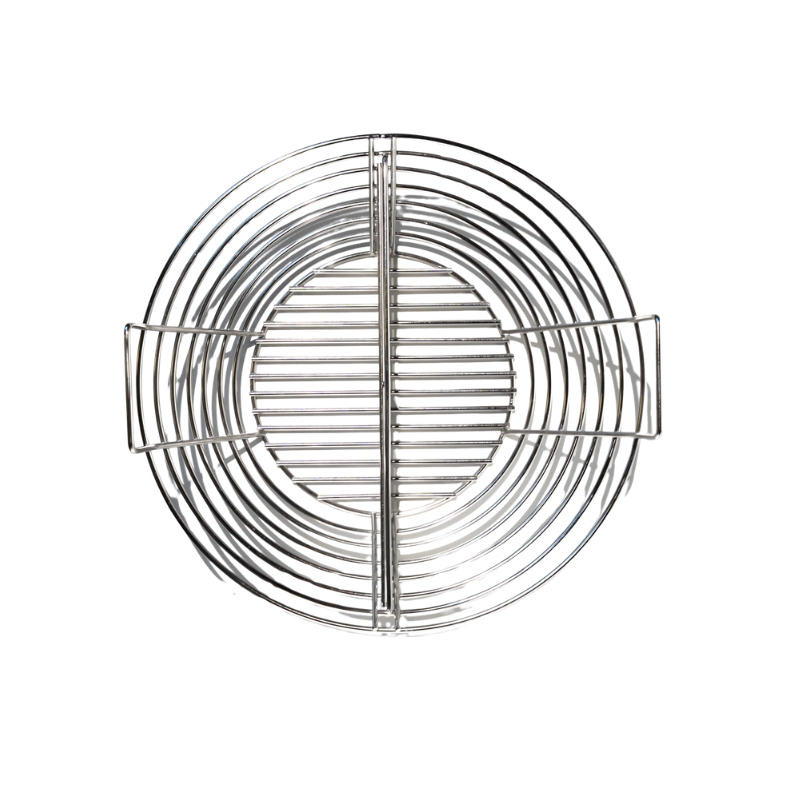
A charcoal basket already helps during seasoning, since it keeps the small amount of charcoal together and keeps the airway clear — exactly what a stable low temperature needs. Heat-resistant gloves belong in the picture from day one too.
Afterward: ash and care
Once cooled, remove the ash — it draws moisture and clogs the lower vents. With an Easy Clean ash container, it pulls out instead of getting scraped out. Never scrub the interior: it cleans itself when you occasionally burn the grill off at 250–300°C.
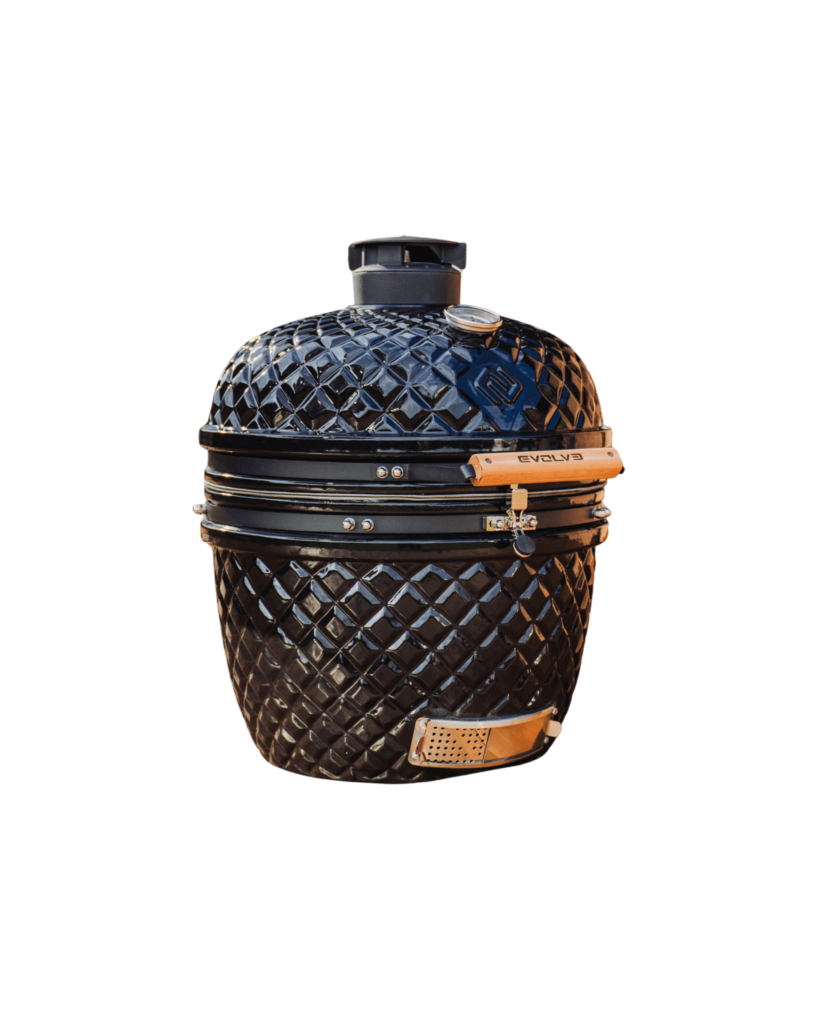
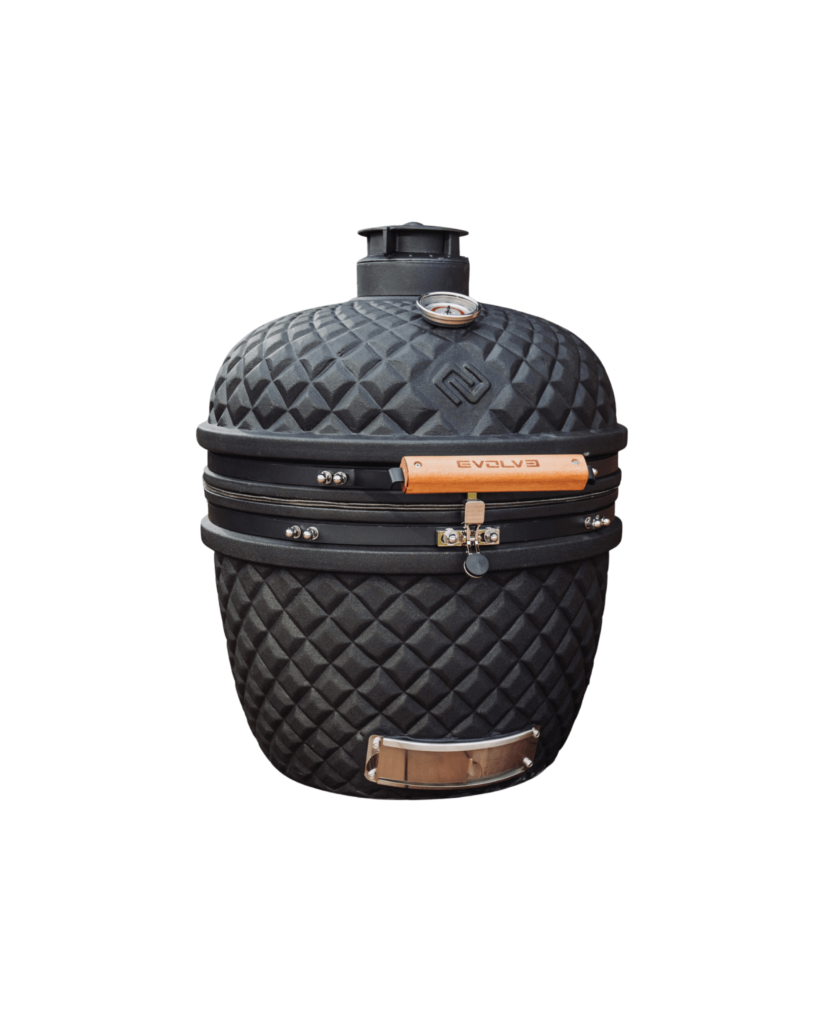
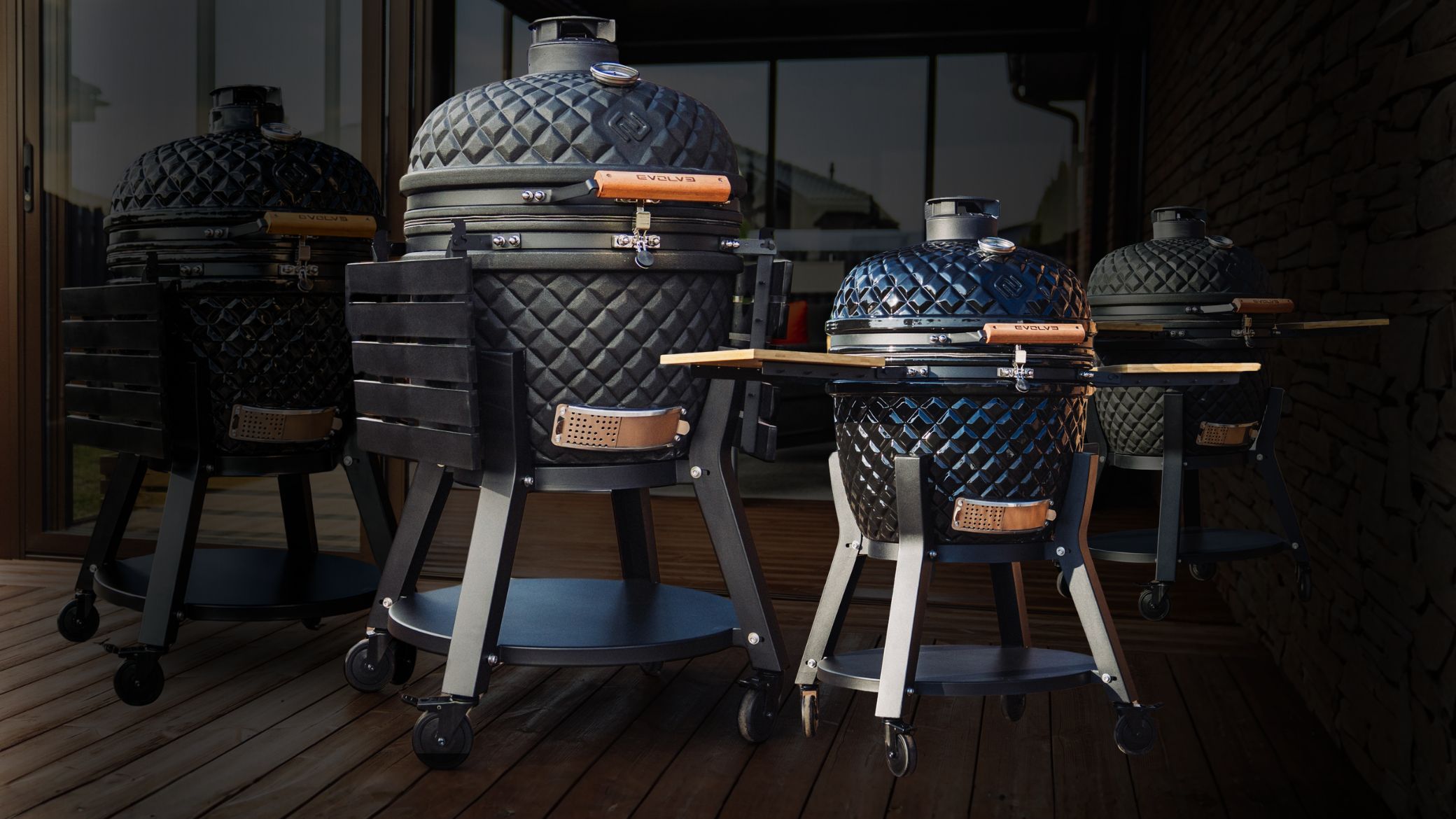
Every model in the Evolve Ultra Series ships with heat deflectors, a two-piece firebox and a rain cover, so there’s nothing extra to buy for the first burn.
Frequently asked questions
Do I need to repeat the seasoning?
No, once is enough. Only if you replace the gasket is another slow burn worthwhile.
The glaze has developed fine lines — is that a crack?
Fine hairline marks in the glaze are normal and don’t affect function. The ceramic body underneath is unaffected.
How long does cooling take?
Several hours. Only put the rain cover on once the grill is completely cold and dry.
Seasoning a kamado: how to tell it worked
A successful first burn shows itself not in the grill but in how it behaves afterward. The gasket seals snugly, the lid doesn’t drop when released, and when you close both vents, the coals go out within a few minutes. If the fire keeps burning, air is getting in somewhere — in which case a second, equally slow round is worthwhile before you go to pizza temperature for the first time.
Fine hairline cracks in the glaze aren’t a warning sign. They come from the different expansion rates of the glaze and the ceramic body, are normal on glazed grills, and have nothing to do with function. If you want to season a kamado without getting them, you can at best delay them, not prevent them.
For what happens technically when glazes are fired, see the Wikipedia article on ceramic glaze.
Frequently asked questions about first use
Can I put meat on during the first burn?
Better not to. The first burn serves the material, and the temperatures are below what you’d want for a good result. Save your first food for the second round.
Does the grill smell the first time?
A faint smell of gasket material and manufacturing residue is normal and clears within the first burn. If it lingers, check whether packaging remnants or stickers were left inside.
One thing that makes the first burn easier is keeping the fire where you put it. A charcoal basket holds the fuel in a defined space rather than spread across the bowl, which makes a low first burn simpler to hold and the leftover charcoal easier to lift out afterwards. It is listed with the rest of the kamado accessories, and comes as standard in the Chef Combo.