Heat-up time, flavor, temperature range, running costs, and effort — an honest comparison between a kamado and a gas grill.
Ceramic grill vs. gas grill — the short answer: gas wins on speed and convenience, ceramic wins on temperature range, flavor, and longevity. If you grill quickly on weeknights, go with gas; if you cook, smoke, and bake on weekends, go with the ceramic grill.
The question usually gets framed the wrong way. It isn’t about which grill is better, but about how you actually grill. A gas grill and a ceramic grill solve different problems — and sorting that out before you buy saves you from ending up with a second grill.
Heat-Up Time: Clear Point for Gas
A gas grill reaches temperature in five minutes. A kamado needs 15 to 20 minutes for the ceramic to warm through. If you grill spontaneously on weeknights after work, that’s a genuine argument. But the advantage flips once the cook gets longer: the kamado then holds its temperature for hours without you doing anything.
Temperature Range: Clear Point for Ceramic
A gas grill covers a mid-range very well. A kamado covers both extremes. On the low end, it holds stable low temperatures for smoking and low & slow; on the high end, it reaches the heat a pizza base needs. That means you replace a smoker and a pizza oven with one appliance — the reason a kamado is often the cheaper solution despite the higher purchase price.
Flavor
There’s no argument here: charcoal and smoking wood produce flavors gas simply doesn’t deliver. A gas grill cooks clean and neutral. If you’re after smoke flavor, the decision has already been made.
Running Costs and Consumption
Gas is usually cheaper per cookout — but the gap is smaller than most people assume. Thanks to the insulating ceramic, a kamado uses noticeably less charcoal than an open steel grill, and with the vents closed, the coals go out after cooking instead of burning all the way down. The leftover charcoal gets reused next time.
Effort
A gas grill is more convenient day to day: turn it on, light it, done. With a kamado, there’s lighting the charcoal, plus ash that needs clearing out regularly. How much effort that actually is depends on the model — with an Easy Clean ash drawer, the ash gets pulled out instead of scraped out, cutting the job down to a few minutes.
Ceramic Grill vs. Gas Grill in Winter
An unexpected point in favor of ceramic: a kamado is noticeably more efficient in winter, since the thick walls largely shrug off outdoor temperature. A gas grill or steel grill loses a noticeable amount of performance in the cold.
Ceramic Grill vs. Gas Grill: Our Recommendation
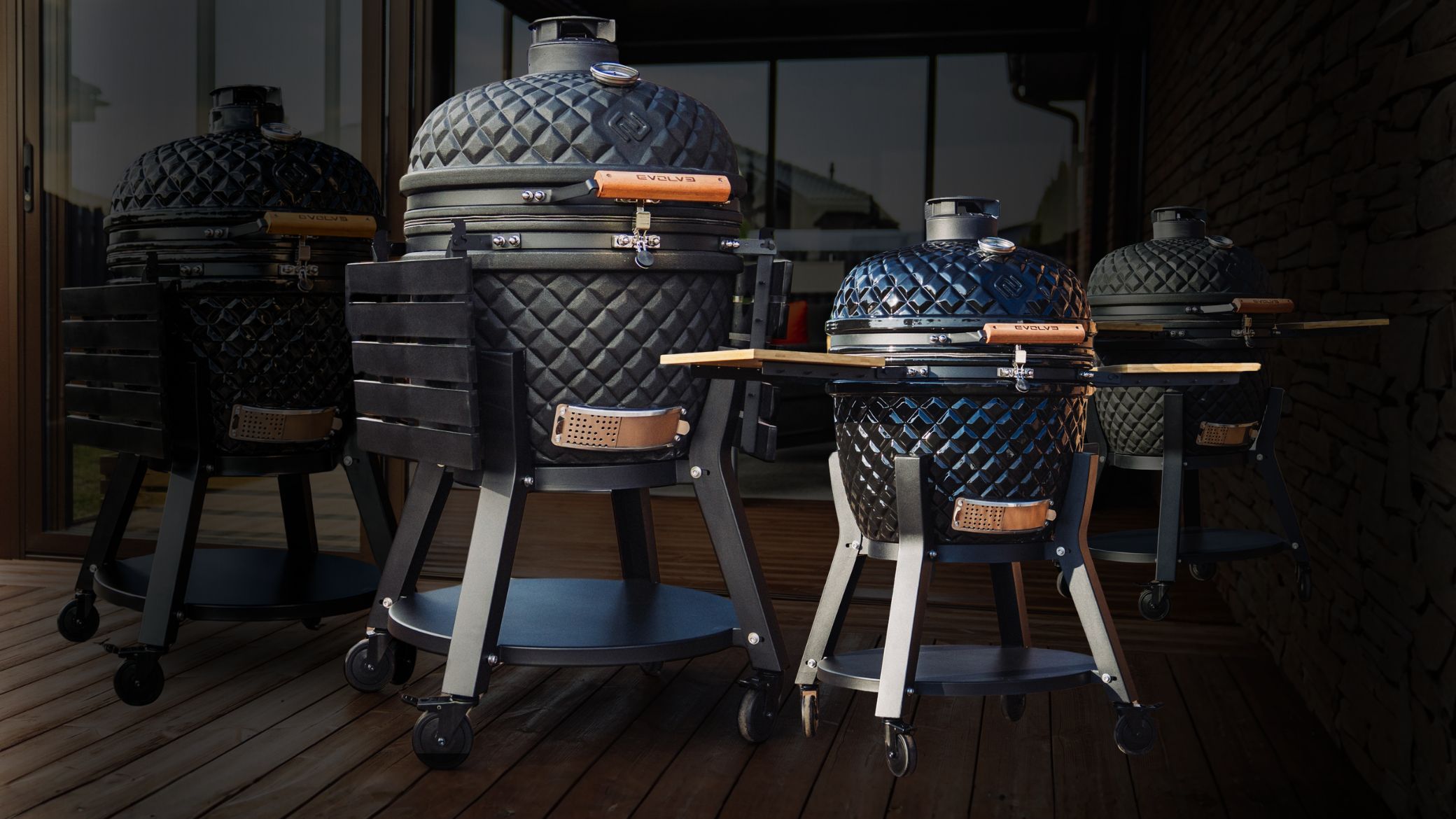
If you mostly grill quickly on weeknights — sausages and steaks — and value convenience over flavor: gas grill. If you cook on weekends, want to bake pizza, smoke, or try low & slow, and want one appliance for many years: ceramic grill. Models in the Evolve Kamado Collection start at €749.
Ceramic Grill vs. Gas Grill: Frequently Asked Questions
Can a ceramic grill fully replace a gas grill?
For almost everything, yes. The one area where gas stays systematically ahead is spontaneous weeknight grilling: five minutes of lead time versus fifteen to twenty. If you don’t need that difference, switching to ceramic loses you nothing and adds smoking, baking, and winter use.
Is a ceramic grill more expensive to run?
No. Charcoal costs a bit more per cookout than gas, but thanks to the insulating ceramic, a kamado uses noticeably less of it than an open steel grill, and with the vents closed, the coals go out instead of burning away. Over the years, the longer lifespan more than makes up the difference.
How loud and how smoky is a kamado on a balcony?
Noticeably less smoky than an open charcoal grill, because combustion inside the closed ceramic body is more complete. Visible smoke mostly happens while lighting it and when you add smoking wood. Still, check your building rules on charcoal beforehand — that’s a more common obstacle than the smoke itself.
Is switching worth it if the gas grill still works?
Then wait. A ceramic grill is an addition to your setup, not a replacement for something that still works. The sensible time to switch is when the gas grill would need replacing anyway — then you’re comparing full price against full price, and the math looks different.
Ceramic Grill vs. Gas Grill: The Five-Year Math
The purchase price is the least informative part of this comparison. A mid-range gas grill wears out after a few years exactly where steel tends to wear out: burners, grates, lid hinge. Ceramic ages differently — it doesn’t rust and doesn’t burn through, which is exactly why a lifetime warranty is even possible on a kamado.
Be honest about what else you’d end up buying. Anyone who’d get a smoker and a pizza oven alongside the gas grill anyway isn’t comparing €799 against €1,000 — they’re comparing three appliances against one. Anyone who genuinely only grills sausages on weeknights, on the other hand, buys capabilities with a ceramic grill that stay unused.
For the underlying principle of indirect heat, the Wikipedia article on grilling gives good context.