Kamados make very good pizza, and the reasons are specific. If you are choosing one mainly for pizza, these are the things that decide the result — and a couple that get talked about more than they deserve.
Why a ceramic grill suits pizza
A pizza oven works by hitting the base from below with stored heat while the air above browns the top, and both parts have to happen in the same two or three minutes. A ceramic kamado does exactly this: the dome radiates heat down onto the toppings while the stone delivers it into the base, and the thick ceramic holds the temperature steady while the dome is open.
That last part is what separates a ceramic grill from a steel one for pizza. Every time you open a thin-walled barbecue to slide a pizza in, the temperature falls and takes minutes to recover. A kamado has the heat stored in its walls, so it comes back almost immediately.
What actually matters
The stone, more than the grill. A glazed stone that has had 20 to 30 minutes at temperature is what makes the base crisp. Put a cold stone in a hot kamado and the first pizza will be pale underneath no matter how good the grill is.
Dome space above the pizza. You want radiant heat coming down from a distance, not a lid sitting on top of the toppings. A full-size kamado has the dome height for this; very compact models struggle.
Holding 300 to 350 °C without drifting. Pizza is unforgiving of a temperature that wanders. A thick ceramic wall and a gasket that seals are what keep it steady — which is why wall thickness matters more than diameter here.
Room to work. Sliding a pizza off a peel onto a stone is easier with space around it. The Evolve grate is 51 cm, roughly 2,040 cm², which leaves margin around a standard pizza rather than requiring a perfect landing.
What matters less than you would think
Brand, mostly. Any full-size ceramic kamado with a decent stone and a sealing gasket will make excellent pizza, and the differences between the good ones at 350 °C are small.
Maximum temperature, too. Kamados will run hotter than 350 °C, and for most home dough that is a way to burn the top before the base sets. Unless you are making true Neapolitan dough, the very high end of the range is not where you will cook.
The setup that works
Light the grill and bring it to 300 to 350 °C with the glazed pizza stone already inside, so the stone saturates rather than merely warming. Use an indirect setup so flame is not licking the base directly. Give the stone at least 20 minutes once you reach temperature.
Then leave two or three minutes between pizzas. Each one pulls heat out of the stone, and that pause is what keeps the fourth as good as the first.
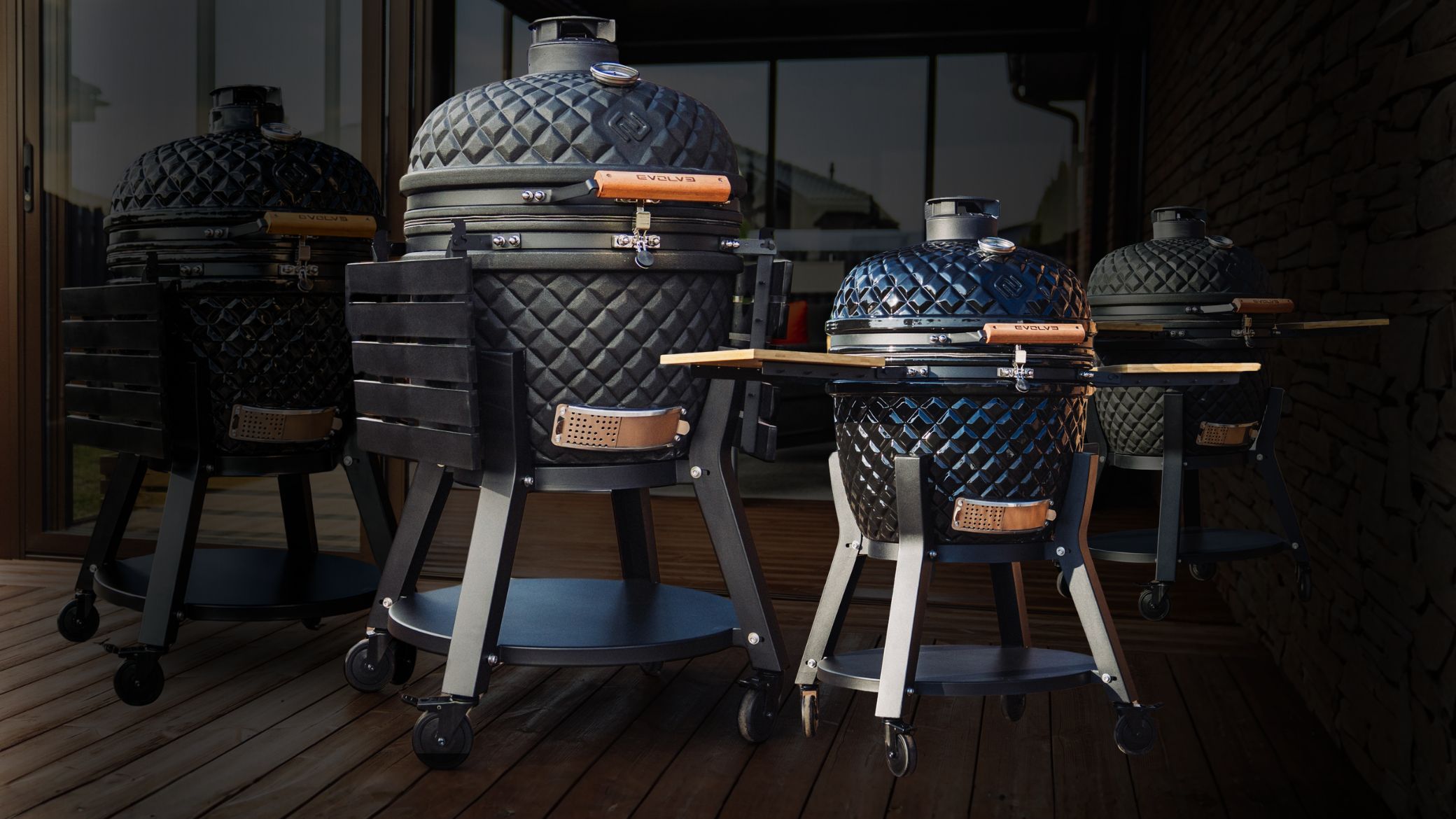
Any Evolve kamado will do this, because the ceramic, grate and ventilation are identical across the range — the stone is what you actually need. It is included in the Chef Combo, or available on its own from the accessories range. See the grills here.
Frequently asked questions
What temperature should a kamado be for pizza?
Between 300 and 350 °C for most home doughs, with the stone given 20 to 30 minutes to come up with it. Neapolitan dough wants hotter and faster; a standard dough at 350 °C will burn on top before the base is done.
Do I need a pizza stone, or will the grate do?
You need the stone. Without it the base only receives heat from the air beneath it and stays soft. A glazed stone stores heat and pulls moisture out of the dough, which is what makes the base crisp rather than chewy.
Does a bigger kamado make better pizza?
It makes bigger pizza, and it gives you more room to work the peel. What decides quality is the stone, the dome holding heat above the pizza, and giving the stone enough time to saturate before the first one goes in.
How many pizzas can I cook in a row?
As many as the stone will hold heat for. Each pizza pulls heat out of it, so leaving two or three minutes between them lets the stone recover. A thicker, fully saturated stone is what makes the fourth pizza as good as the first.