
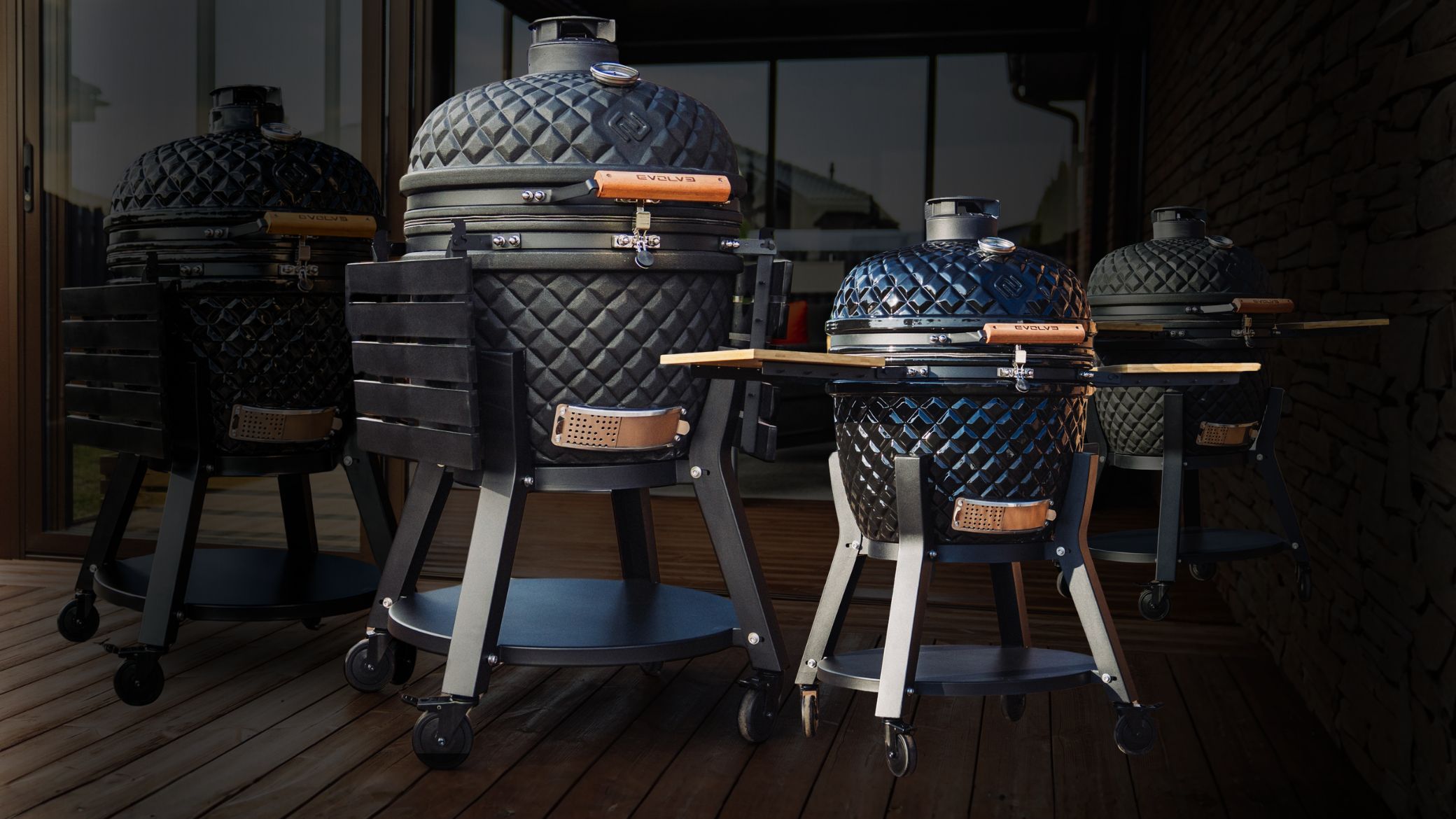
This comparison comes down to one question: do you want the grill to manage the fire, or do you want to?
What a pellet grill does well
It automates. You set a temperature on a dial, an auger feeds compressed wood pellets into a burn pot, a fan regulates the burn, and a controller holds the number you asked for. Overnight cooks become genuinely hands-off, and the temperature is repeatable in a way charcoal is not.
The smoke it produces is clean and consistent. For someone who wants barbecue results without learning fire management, that is a real proposition and the reason pellet grills sell.
What it gives up
Heat. Most pellet grills struggle past the temperature a good sear or a pizza needs. A ceramic kamado runs to 350 °C and beyond without complaint, which is why the same grill does pizza night and brisket.
Power. A pellet grill is an appliance that needs a socket. No electricity, no cook — and a power cut mid-brisket is a real failure mode.
Moving parts. Augers jam, fans fail, controllers die. A kamado has a ceramic body, a gasket and two vents; there is very little to go wrong and nothing that needs a firmware update.
Smoke intensity. Pellets burn efficiently, which is exactly why they produce less smoke. If you want the heavier flavour of charcoal and a wood chunk, a pellet grill will read as mild.
What a kamado gives up
Automation, and it is worth being honest about that. A pellet grill will hold 110 °C overnight while you sleep with no involvement at all. A kamado will also hold it — the ceramic does most of the work — but you set the vents yourself and you learn how your grill behaves.
Repeatability is the other one. A dial set to 120 °C is the same every time; vents are a skill, and the first few cooks will drift while you get the feel of it.
Which to buy
Buy a pellet grill if hands-off is the point, you always cook near power, and you mostly cook low and slow.
Buy a kamado if you want one grill for everything — searing, smoking and pizza — with no electronics, very low running cost and nothing that can fail in the middle of a cook. If you like the idea of a fire you understand rather than an appliance you program, that is the honest case for ceramic.
Our guide to holding temperature on a kamado shows how much of the automation you actually need, and the Evolve range is here.
Frequently asked questions
Which gets hotter, a kamado or a pellet grill?
A kamado, comfortably. Ceramic grills run past 350 °C, which is what pizza and a proper sear need. Most pellet grills top out lower, and some add a separate sear zone to compensate.
Which has more smoke flavour?
A kamado at low temperature, generally. Pellet grills produce clean, consistent smoke but relatively little of it; charcoal with a wood chunk gives a heavier flavour. Some people prefer the lighter pellet profile.
Do pellet grills need electricity?
Yes. The auger, fan and controller all run on mains power, so a pellet grill will not work at a cabin or anywhere without a socket. A kamado needs nothing.
Which is cheaper to run?
A kamado, usually. Ceramic uses little charcoal because it loses little heat, while a pellet grill feeds pellets continuously to maintain temperature and also draws power throughout.