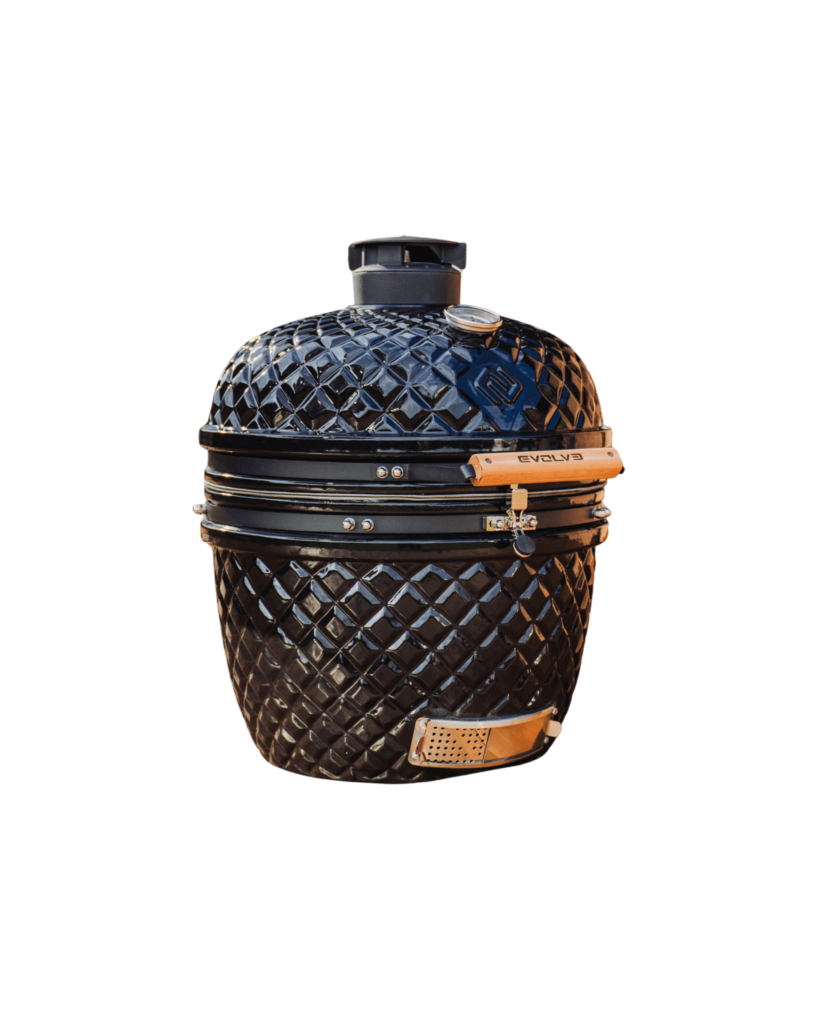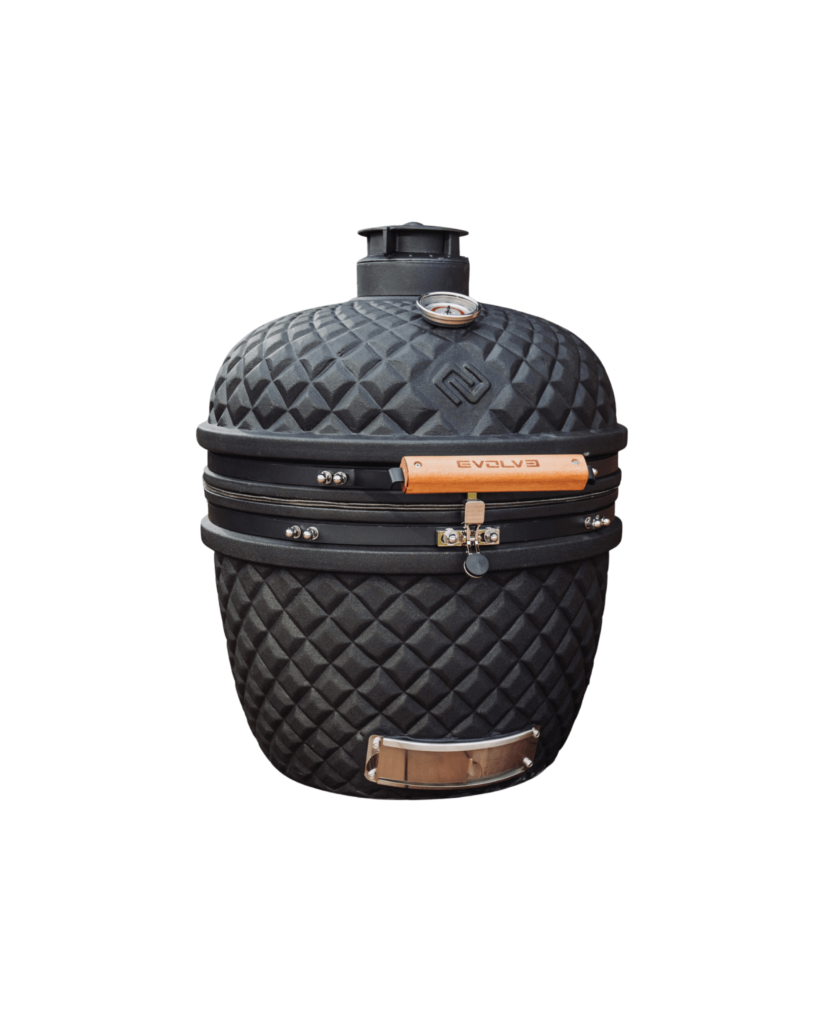
How much upkeep a ceramic grill really needs, what you should never do, and how to get a kamado through winter.
Cleaning a kamado mostly means leaving the right things alone. A ceramic grill needs less care than its reputation suggests, and most kamado damage isn’t caused by neglect — it’s caused by over-eager cleaning with products that have no business touching a ceramic body.
This guide covers the four areas that actually need attention — the interior, the ash, the grates, and the gasket — plus winterizing.
Cleaning a Kamado: The Interior Cleans Itself
Most important first: don’t scrub the ceramic interior. Instead, after several cooks, run the grill up to 250–300°C (480–570°F) for 30 minutes. Grease residue burns off completely with no scrubbing needed. The dark patina inside isn’t dirt — it’s normal.
Never Dish Soap or Water Inside
Ceramic is porous. It absorbs dish soap and releases it back into your food the next time you heat up. Water inside is risky for a different reason: moisture that soaks in expands when you heat up quickly and can crack the ceramic. Keep the interior dry — burn it off and brush it out, nothing more.
Ash: The Point That Actually Matters
Ash is the one real maintenance item. It builds up under the firebox and blocks the lower vent — and without free airflow, you lose temperature control. With regular use, clear the ash out every three to four cookouts. With an Easy Clean ash drawer, that’s a single motion instead of a scraping job.
Cleaning a Kamado: Grates and Deflectors
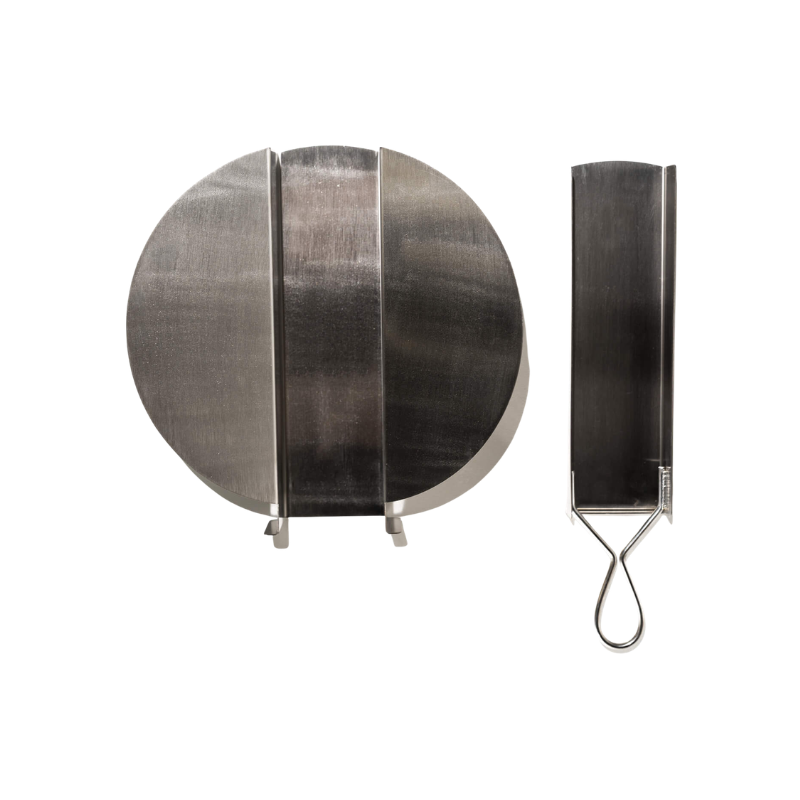
Brush cast-iron grates while they’re still warm, while residue is soft. No dish soap — cast iron relies on its seasoned layer. Heat deflectors darken over time; that’s use, not damage. Flip them occasionally so they age evenly.
A crack in a deflector, on the other hand, is a real finding. It’s almost always caused by thermal shock — a cold stone on hot coals, or water hitting a hot deflector — not by age. So place deflectors in before you light the fire, not once the grill is already up to temperature. Cracked deflectors, by the way, still work fine as long as they sit flat; replace them once they start to wobble.
Checking the Gasket
The fiberglass gasket is the one wear part that deserves attention. Test it once a season: close the lid, close both vents — if the coals go out within minutes, the gasket is fine. If the fire keeps burning, air is getting in somewhere.
Winterizing
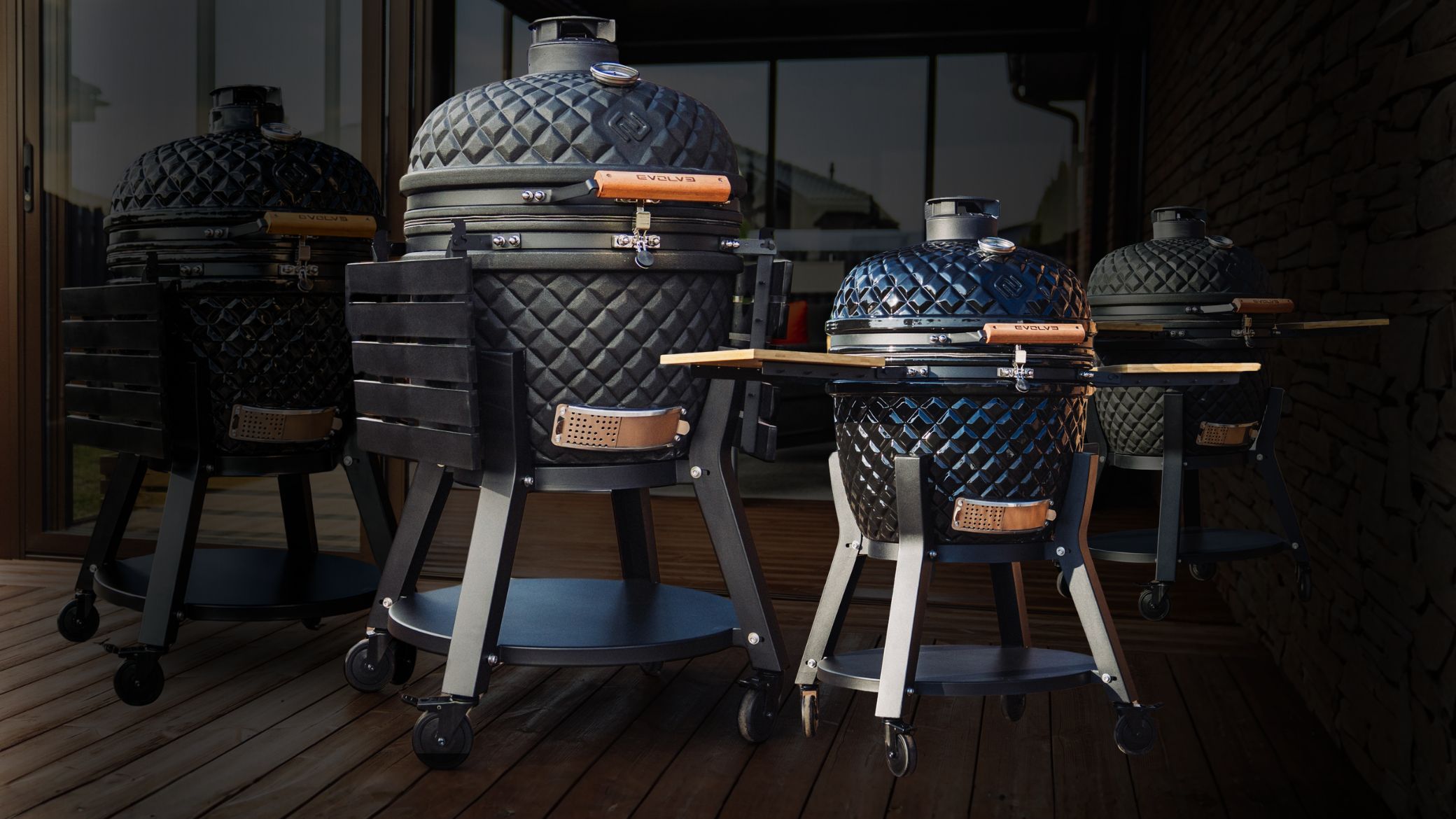
Ceramic is frost-resistant, so the kamado can stay outside. Two things matter here: the grill must be fully cooled and dry before you cover it, and the ash needs to come out beforehand — it draws moisture and turns into a corrosive mass over winter. A rain cover is included with every model in the Evolve Ultra Series.
How Often Should You Clean a Kamado?
There’s no fixed schedule, but three useful markers. After every cookout, brush the grates while they’re still warm — it takes a minute and saves scraping later. Every three to four cooks, take the ash out, since otherwise it blocks the lower vent and takes away your temperature control. Two or three times a season, burn the grill off at 250–300°C (480–570°F), which burns away grease residue inside with nothing left to scrub.
Clean a kamado at this pace and you won’t need cleaning products at all — which is exactly the goal. Anything you put into a porous ceramic body comes back out the next time you heat it up.
Cleaning a Kamado: What You’ll Need
Surprisingly little: a brush for the grates, heat-resistant gloves, and a way to get rid of the ash. That last point is the one place where the right accessory really pays off — with a pull-out Easy Clean ash drawer, a scraping job becomes a single motion.
If you want to go deeper into how ceramic grills are built, the Wikipedia article on the kamado gives a good overview of its origins and how it works.
How Long Does All This Last?
Ceramic doesn’t rust and doesn’t burn through — which is why Evolve backs it with a warranty for its full working life. Realistically, you’ll replace the gasket once in ten years. Nothing else. A kamado you clean properly will outlast every gas grill you’d buy and throw away over the same period.