What you actually need at the start, the three mistakes almost everyone makes, and how to get from your first steak to your first pulled pork.
Kamado grilling for beginners: you need less to start than what gets sold to you — gloves, a charcoal basket, and patience with temperature. The rest comes once you know how often you’ll actually be grilling.
A kamado isn’t a difficult appliance, just a different one. If you’re coming from gas or a kettle grill, there’s exactly one thing to relearn — controlling temperature through airflow instead of charcoal quantity. Everything else is practice, and that comes quickly.
Kamado grilling for beginners: what you need to start
Less than what’s often sold to you. The grill itself already comes with heat deflectors, firebox, thermometer and rain cover. Add heat-resistant gloves — the lid and deflectors get very hot — and a charcoal basket, which keeps the coals together and makes temperature predictable. Everything else can wait.
If you already know pizza and steaks are part of the plan, a Chef Combo is the cheaper route than buying pieces later — it already includes the pizza stone, cast iron grates, tools and gloves.
The three mistakes almost everyone makes
Letting it get too hot. Ceramic is slow and keeps climbing. Approach your target temperature from below and close the vents about 20°C before you reach it. Wait until the thermometer shows your target, and you’ll overshoot by 50°C — then need half an hour to cool back down.
Opening the lid too often. Every peek costs heat that the ceramic then has to rebuild. The large thermometer exists for exactly this reason.
Leaving the ash in. Once it clogs the lower vents, you lose control over airflow — the most common reason a kamado “won’t get hot anymore.”
A plan for your first five evenings
1. Steaks at high heat. Both vents wide open, direct grilling. This is where you learn how fast the grill comes up to temperature.
2. Whole chicken at 180°C. Deflectors in, indirect. Your first real exercise in temperature control.
3. Pizza at 300°C. With a pizza stone, which needs to heat up along with the grill.
4. Spareribs at 120°C. Your entry into low and slow, about five hours.
5. Pulled pork. Eight hours at 110°C — from here on, the grill does the work on its own.
Which kamado grill for beginners?
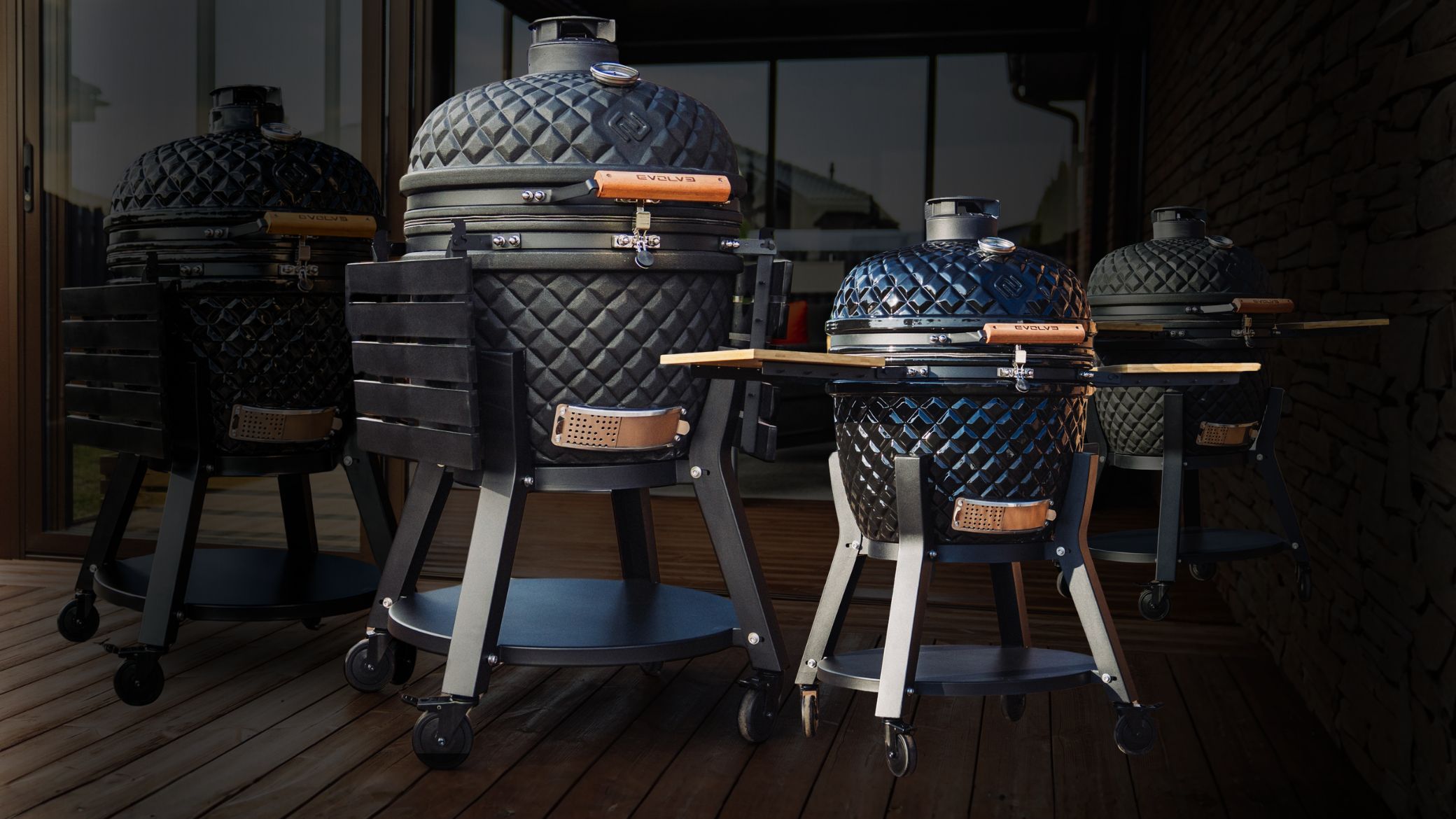
There’s no beginner model and no pro model — the Evolve Ultra Series is built the same way across every variant. The cheapest entry point is the The Beauty Solo Kamado at EUR 749; if you want the stand included from the start, you begin at EUR 949.
Frequently asked questions
Do I need to season the kamado before the first use?
Bring it up slowly the first time and hold it at a medium temperature for a while instead of going straight to maximum. That protects the gasket and the glaze.
Which charcoal is the right one?
Coarse, restaurant-grade lump charcoal. Briquettes with binders burn less cleanly and leave more ash.
How long does lighting take?
15 to 20 minutes for the ceramic to warm through. After that, the grill holds its temperature for hours without intervention.
Kamado grilling for beginners: what actually happens in the first month
The first week goes toward getting a feel for how sluggishly the ceramic responds. That’s normal and can’t be shortcut: a kamado answers every vent adjustment with a delay, and if you keep correcting in the meantime, you end up oscillating in ever-bigger swings. Small corrections, then wait — that’s the entire skill.
After about five sessions, it clicks. From then on, you set the vents once and the grill holds temperature without you standing over it. That’s exactly why kamado grilling for beginners feels demanding at first and considerably more relaxed after a month.
For the basics of coals, airflow and smoke development, see the Wikipedia article on charcoal.
Frequently asked questions from beginners
How much charcoal do I load in the first time?
A third of the firebox is enough for practice. Leftover charcoal won’t burn anyway as long as you don’t give it airflow — but with less charcoal, the grill responds more slowly, which makes learning to dial it in easier at the start.
What do I do if the fire goes out?
Usually it’s short on air: open the lower vent further and check the ash. A second firelighter cube on the existing charcoal brings the coals back without needing to rebuild from scratch.
Most of the early frustration in that first month comes from missing kit rather than missing skill — no stone for pizza night, no gloves when the dome is hot. If you would rather not assemble that list yourself, the Chef’s Sets arrive with the grates, stone and tools already included. And if you are still choosing a grill, the kamado buying guide covers what actually separates one ceramic grill from another, with the full range here.