
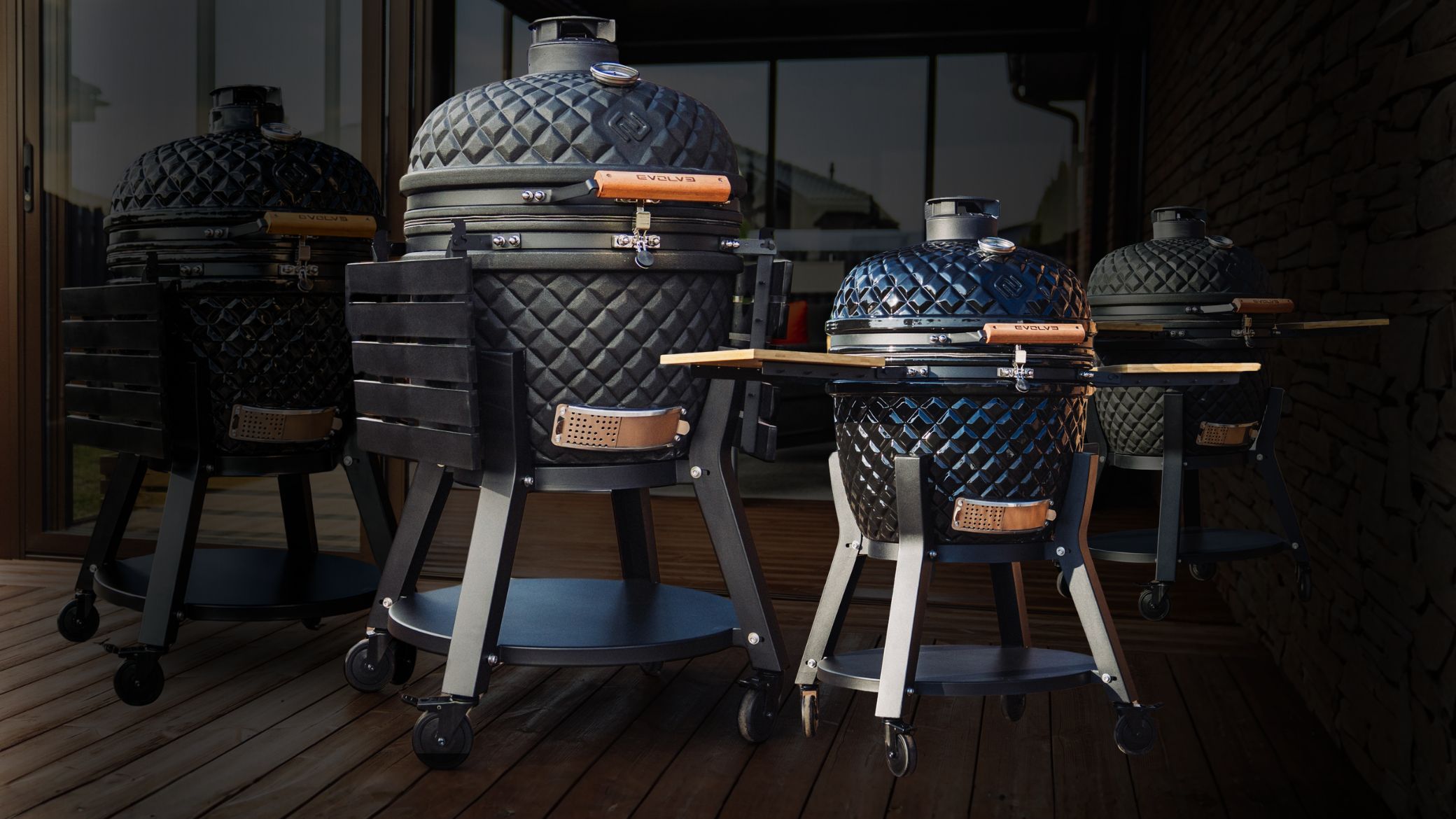
Kamado sizing is quoted as grate diameter, which is a slightly misleading number. The useful figure is the area that comes from it, and area grows with the square of the diameter.
What the numbers mean
A few centimetres of diameter is a lot more surface than it sounds. A 46 cm grate gives about 1,688 cm². A 51 cm grate gives around 2,040 cm². Five centimetres of width is roughly 20 percent more cooking area — which in practice is the difference between two racks of ribs lying flat and one of them standing in a rack.
The rough tiers:
- Mini and portable, around 33 to 35 cm: one or two people, balconies, camping.
- Compact, around 40 cm: a couple, or a small second grill.
- Full size, 46 to 51 cm: families and guests. This is where most people should be.
- Extra large, above 55 cm: entertaining regularly, or cooking whole cuts.
Work it out from your actual cooking
Not from the largest meal you can imagine — from what you cook most weeks.
If that is two to four people on a weeknight, a full-size grill is already generous and a compact one is workable. If it is six or more, or if you want a brisket and the sides on at the same time, full size is the floor rather than the ceiling.
The question worth asking is whether you will ever cook indirectly with a stone or a deflector in place. Those take up room, and a grill that is adequate for direct grilling can get tight once a deflector and a drip tray are in there too.
Why bigger is not automatically better
A larger kamado costs more, weighs more and takes longer to come up to temperature. It does not burn proportionally more charcoal — you light only the part of the basket you need — but you are paying for capacity you may use twice a year.
The counter-argument is that thermal mass scales with the body. A bigger grill is steadier on a long cook and recovers faster when opened, so if you mostly smoke rather than sear, the extra size is doing something useful beyond capacity.
The practical recommendation
For most households, one full-size grill in the 46 to 51 cm range is the right answer, and the money that would have gone into a larger body is better spent on a cast iron grate and a pizza stone.
Every Evolve kamado uses the same 51 cm grate at roughly 2,040 cm², so the choice here is not capacity but configuration — solo, with a cart, or as a full set. We looked at whether that surface is enough for guests in this piece, and the configurations are here.
Frequently asked questions
What is the most common kamado size?
Around 46 cm — 18 inches — is the reference size the established brands build their main model around. Anything from roughly 45 to 55 cm counts as full size.
How many people does a 51 cm grate feed?
Comfortably six to eight in one pass — roughly eight burgers or two racks of ribs laid flat. Around 2,040 cm² is enough for most family cooking without staging batches.
Is a mini or 13-inch kamado worth it?
For one or two people, for a balcony, or as a portable second grill, yes. As your only grill it is limiting: small bodies hold less charcoal, so long cooks need refuelling.
Does a bigger kamado use more charcoal?
It holds more, but it does not necessarily burn faster — you light only the section you need. The bigger body also carries more thermal mass, which makes it steadier on long cooks.