How much actually fits on 51 cm, why the outer zone matters more than total surface area, and when a bigger grill buys you nothing.
A kamado grill with a 51 cm grate is enough for six to eight people in one round. What matters isn’t total surface area but how much of it sits outside the direct coals — and that’s exactly where the extra centimeters pay off.
Grate diameter is the number kamados get compared on — and it’s usually misunderstood. What decides isn’t total surface area, but how much of it lies outside the direct coals.
What 51 cm actually means
The Evolve Ultra Series runs at 51 cm, putting it roughly 8–21% ahead of most comparable kamados. In practice: eight to ten steaks in one round, a whole chicken with sides next to it, two pizzas back to back at five minutes each, or a pork shoulder with plenty of clearance from the edge.
Why the outer zone counts
With indirect cooking, the food doesn’t sit over the coals — it sits beside them or over the heat deflectors. The bigger the diameter, the more surface lies in that calmer zone. A small kamado forces everything toward the center — exactly where it browns fastest. So the extra centimeters don’t show up on a steak; they show up in long cooks and in two-zone cooking, where direct and indirect heat are running at once.
How many people is that enough for?
Six to eight people in one round, without reloading or holding food warm. For a family with weekend guests, that’s the right size. It only gets tight once you’re regularly cooking for twelve or more — and at that point, a second round is usually more practical than a bigger grill, since a kamado holds its temperature anyway.
When a bigger grill buys you nothing
A bigger ceramic body needs more charcoal, takes longer to heat up, and needs noticeably more space — at around 96 kg, an Evolve kamado is already not something you move around casually. If you’re not regularly cooking for large groups, you’re paying for surface that stays cold.
What makes better use of the surface
More than centimeters, what matters is what sits on the grate. Cast iron grates hold heat and don’t let the temperature drop when food goes on — the difference between a proper sear and gray meat. And a charcoal basket keeps the coals compact, so the outer zone stays genuinely indirect.
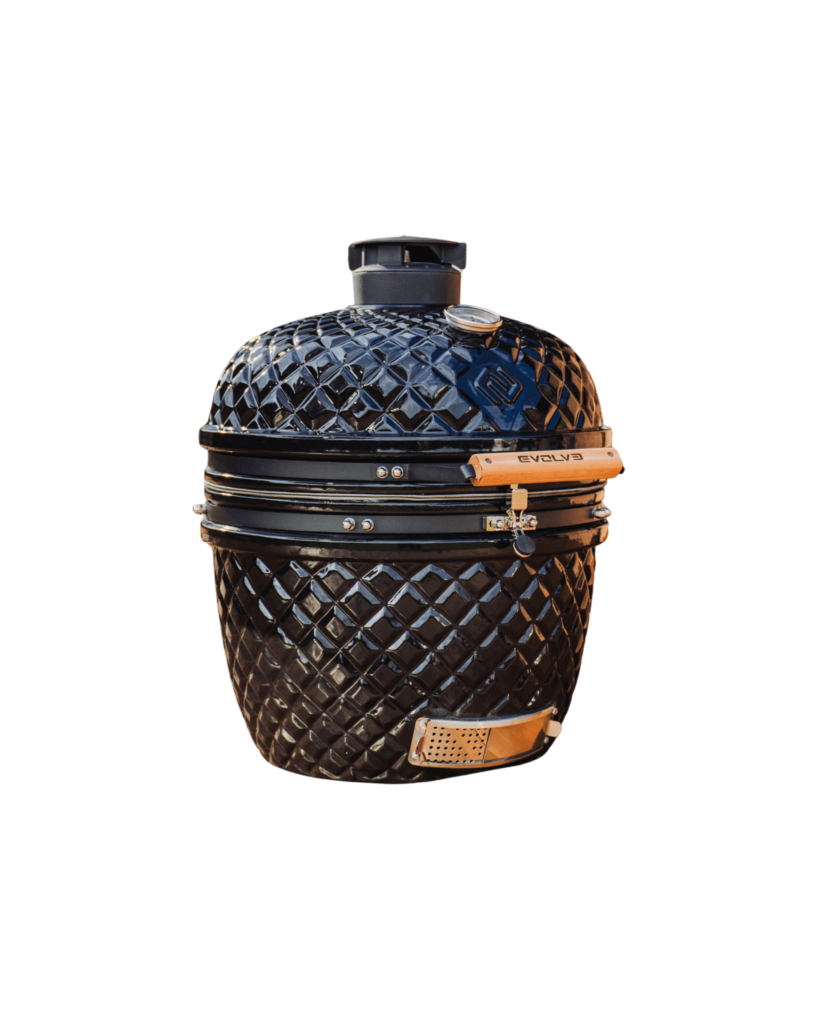
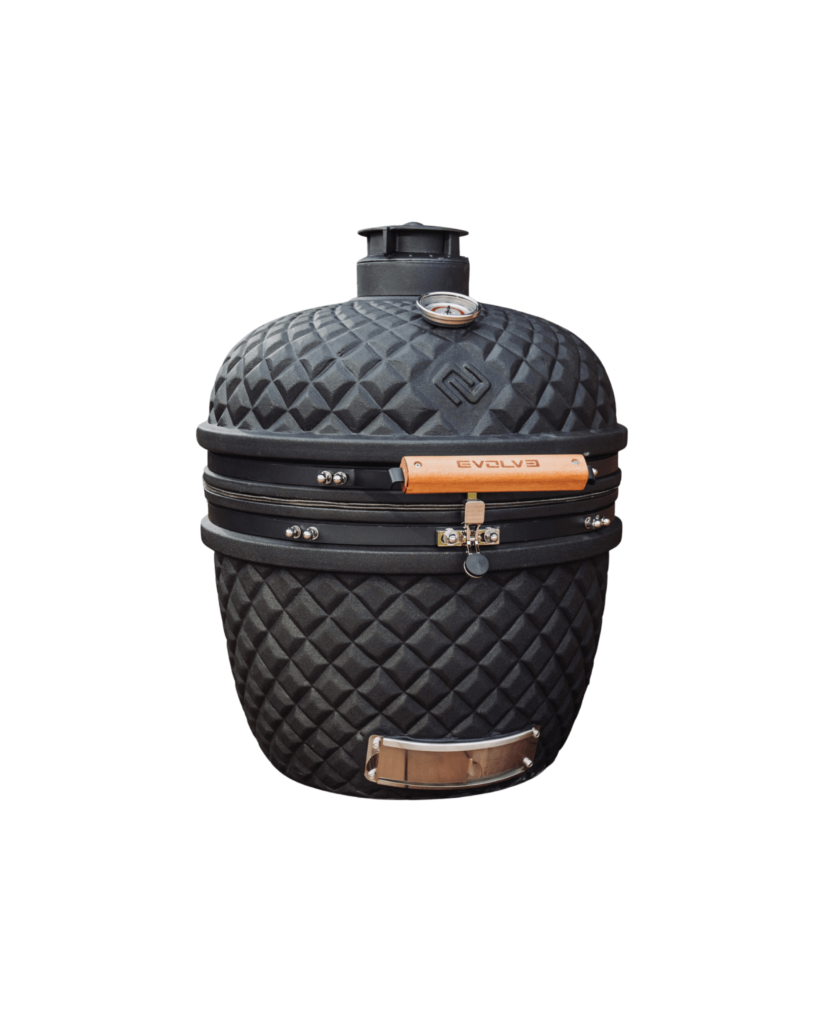
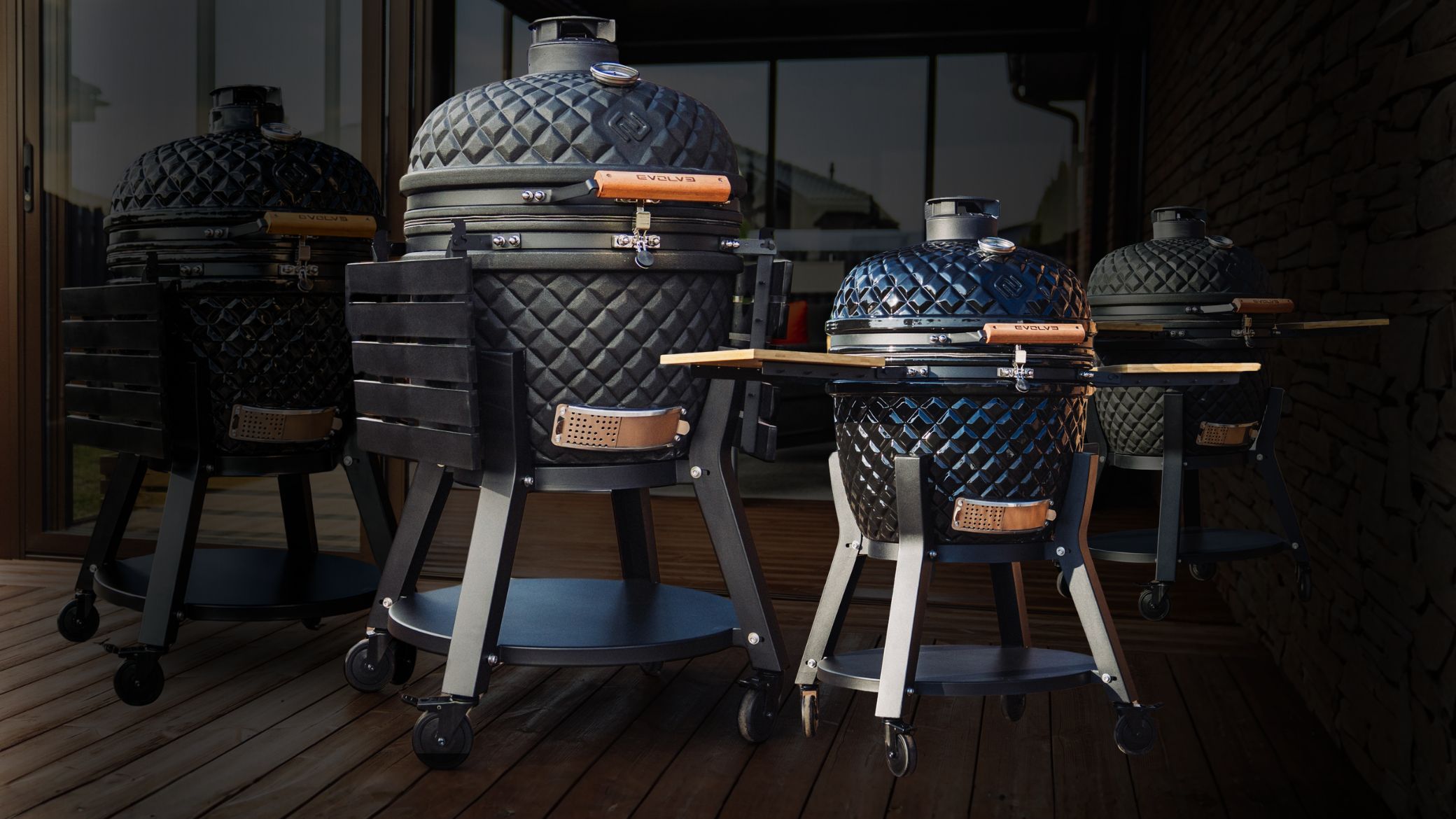
Both models use the same grate: The Beast and The Beauty differ only in finish.
Frequently asked questions
Does a standard pizza stone fit on 51 cm?
The Evolve pizza stone is sized for this grate and leaves room around the edge for circulation. Third-party stones should be smaller than the grate, or heat will get trapped.
How much charcoal does one load need?
At 110°C, a well-filled firebox easily holds for twelve hours. Leftover charcoal doesn’t burn as long as you don’t give it airflow.
Can I use two levels?
Yes — with an expansion rack you double the surface for indirect cooking, useful for things like ribs.
Kamado grill at 51 cm: what the surface means in practice
Numbers on a spec sheet don’t help much if nobody tells you what fits on them. Concretely: eight to ten steaks side by side, a whole chicken with vegetables next to it, two pizzas back to back, or a pork shoulder with enough clearance from the edge that the outer zone stays genuinely indirect. That clearance is exactly why a 51 cm kamado grill feels different from a 46 cm one.
If you regularly cook for twelve people, it’s better to plan two rounds than to buy a bigger grill. A kamado holds its temperature between rounds anyway, so the second round only costs you time, not extra fuel to reheat.
For how heat distributes through ceramic materials, see the Wikipedia article on thermal conductivity.
If the surface figure is what you are weighing up, it is worth seeing it against the rest of the specification — wall thickness, ventilation and what comes in the box all shape how much of that 51 cm you actually use. The kamado buying guide walks through those trade-offs in order, and every configuration in the kamado grill range shares the same grate, so the choice is about what surrounds it rather than the cooking area itself.