
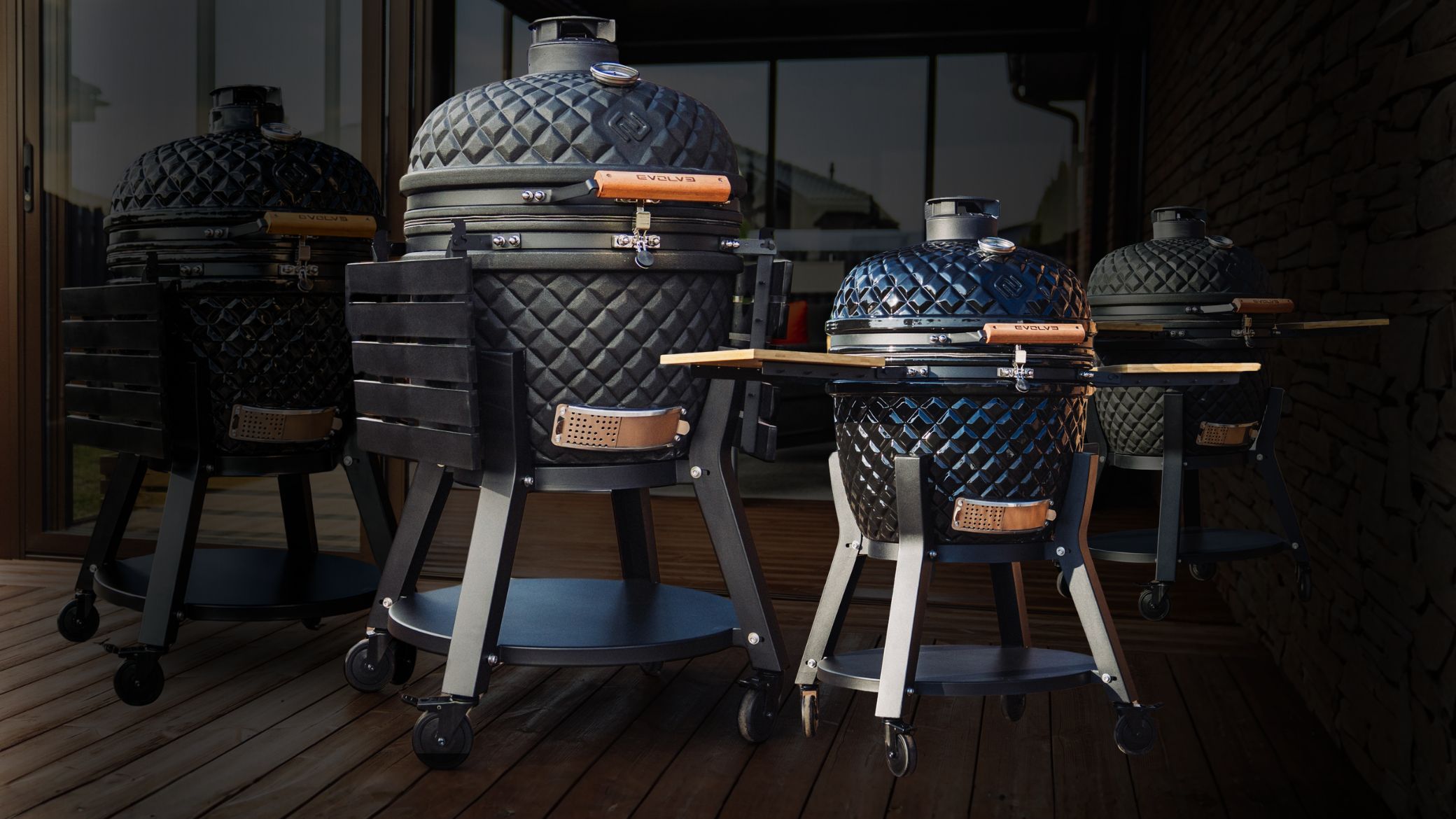
Lighting a kamado is not difficult. Landing on the temperature you wanted is, and the difference between the two is patience in one specific place.
Before you light
Clear the old ash. Ash blocks the lower vent, and a restricted vent means the grill will not reach temperature no matter how well the fire is going — the most common cause of a kamado that “will not get hot”.
Fill the firebox with lump charcoal, not briquettes if you can avoid them: lump lights faster, burns cleaner and leaves less ash. Fill it more than you think you need. Unburnt charcoal is not wasted — you close the vents afterwards and it goes out, ready for next time.
Lighting
Use natural firelighters, an electric starter or a chimney. Never lighter fluid — ceramic is porous, it absorbs the smell, and it will come back in your food for weeks.
The number of ignition points is your first control. For a low and slow cook, light a single spot and let the fire spread slowly through the basket. For high heat, light two or three spots across it so the fire establishes quickly and broadly.
Leave the lid open with the bottom vent wide for about 10 minutes until the charcoal catches properly and the flames settle into a glow.
Coming up to temperature — the part that matters
Close the lid, leave the bottom vent open and the top vent wide, and watch the dome thermometer.
Here is the mistake almost everyone makes first: waiting until the grill reaches the target and then closing the vents. By then it is too late. The ceramic has absorbed far more heat than the air temperature suggests, and the grill will keep climbing for another 20 or 30 degrees after you shut things down.
Start closing the vents about 30 to 40 °C below your target and let it coast up. If you want 120 °C, begin restricting around 80 to 90 °C. The grill will drift up and settle.
Settling
Give it 15 to 20 minutes at temperature before food goes on. Two things are happening: the ceramic is saturating so the temperature stops drifting, and the last of the firelighter smoke is burning off. Food added during that window picks up an acrid flavour.
If you are using a pizza stone or a deflector, put it in during this phase so it comes up with the grill rather than pulling heat out later.
If you overshoot anyway
Close both vents nearly shut and wait. It will come down, but slowly, because the walls are still radiating everything they stored. This is the asymmetry of ceramic cooking: up is quick, down is not.
That asymmetry is why the whole method above is built around approaching from below. Our guide to holding a temperature once you are there covers the vent settings for each range, and if this is your first fire, the first burn has its own rules.
Frequently asked questions
How long does a kamado take to light?
Around 10 minutes to catch and 15 to 20 more to stabilise at temperature. Rushing the stabilising part is what causes overshoot.
Should I use lighter fluid?
No. Ceramic is porous and absorbs the smell, which then turns up in your food for weeks. Use natural firelighters, an electric starter or a chimney.
How many firelighters do I need?
One for a low and slow cook, two or three spread across the basket for high heat. The number of ignition points is what sets how fast the fire spreads.
What if I overshoot my target temperature?
Close the vents right down and wait — it takes time, because the ceramic is still radiating stored heat. This is why you approach a target from below rather than correcting from above.