
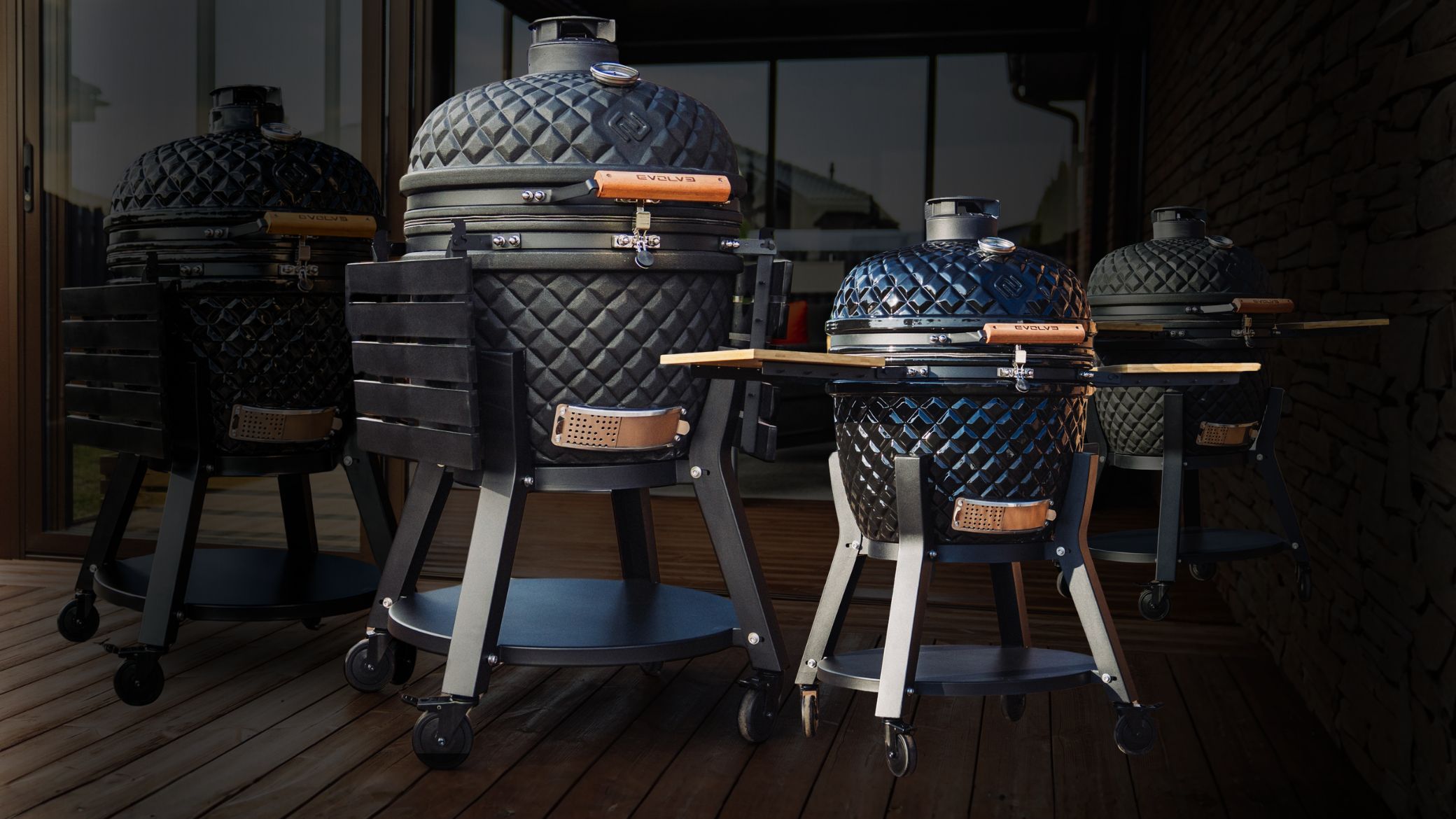
Ribs are the cook a kamado is best suited to, because the only difficult part of smoking them — holding a low temperature for hours — is the thing ceramic does without being asked.
The setup
Indirect, with a deflector between the fire and the meat. Direct heat under ribs at any temperature renders fat straight onto the coals and scorches the underside.
Fill the firebox properly and light a single spot so the fire spreads slowly. Bury two or three wood chunks in the charcoal at different depths rather than laying them on top — that way smoke arrives through the cook instead of all in the first hour.
Bring the grill to 110 to 120 °C using the approach-from-below method: start closing the vents around 80 °C and let it coast up.
Preparing the ribs
Remove the membrane from the bone side. It does not render, and left on it keeps both smoke and rub away from the meat.
Rub simply — salt, pepper, paprika, a little sugar. On a long cook the meat and the smoke are doing the work, and a heavy rub mostly masks them.
The cook
Bones down, meat up, and close the lid. Then leave it alone. Every time the dome opens you lose the moisture that accumulates inside a sealed ceramic body, which is most of why kamado ribs come out succulent.
Expect four to six hours for pork spare ribs at 110 to 120 °C, less for baby back. Check at three hours and then hourly.
To wrap or not. Wrapping in foil partway through steams the meat and speeds things up, at the cost of the bark you have been building. On a dry steel smoker that trade is often worth it. On a kamado, which holds moisture well, unwrapped is usually the better result — but it is a preference, not a rule.
Knowing when they are done
Not by time, and not really by temperature either. Use the bend test: lift a rack from one end with tongs, and when the surface cracks and the rack bends to roughly a right angle without falling apart, it is ready.
Meat pulling back from the bone ends by around a centimetre is the other reliable sign. Ribs that fall off the bone are slightly overdone — traditionally that is past the mark rather than the goal.
Rest, then serve
Ten to fifteen minutes under loose foil. Long enough to let the juices settle, not so long that the bark softens.
If ribs work for you, the same setup handles the rest of the low and slow repertoire — pulled pork and brisket use an identical fire with more time. For holding that temperature confidently in the first place, see controlling kamado temperature.
Frequently asked questions
What temperature for ribs on a kamado?
Between 110 and 130 °C, held steady. A ceramic grill will sit in that band for hours on one basket of charcoal, which is exactly what ribs need.
How long do ribs take?
Usually four to six hours at 110 to 120 °C for pork spare ribs, less for baby back. Time is a guide; the bend test is the actual answer.
Should I wrap ribs in foil?
Wrapping speeds things up and produces softer, more braised meat. Leaving them unwrapped gives better bark. On a kamado, which retains moisture well, wrapping is less necessary than it is on a dry steel smoker.
How much wood should I add?
Two or three chunks buried in the charcoal, not a handful of chips. Ribs take smoke readily and it is easy to overdo — the goal is a background note, not a creosote edge.