Internal temperatures, cook times, and how to handle the stall — the fundamentals of long, slow cooking in a ceramic grill.
Low and slow in a kamado runs at 110–120°C (230–250°F) over many hours: pulled pork takes around eight, a whole brisket twelve to sixteen. The ceramic holds the temperature on its own, which makes this style of cooking noticeably more relaxed on a kamado than on a steel smoker.
Low & slow is the discipline a kamado is built for. A grill that holds its temperature for twelve hours without intervention turns what would be an overnight shift on a steel grill into a matter of lighting it and waiting.
Low & Slow in a Kamado: Setting Up
Put the heat deflectors in — low & slow is always indirect. Fill the firebox well; at 110°C (230°F), a full load easily lasts twelve hours. Bring the temperature up from below and stop around 100°C (212°F), since the ceramic keeps climbing a little further on its own. Only once the reading holds steady does the meat go on the grate.
Pulled Pork
Pork shoulder, 110–120°C (230–250°F), target internal temperature 92–95°C (198–203°F). Plan on 1.5–2 hours per kilogram (roughly 45–55 minutes per pound) — a 4 kg (9 lb) piece needs a good eight hours. Below 90°C (194°F) internal, the meat won’t pull apart cleanly; the connective tissue hasn’t broken down yet. Patience here isn’t a style choice, it’s a requirement.
The Stall
Between 65–75°C (150–165°F), the internal temperature can sit still for hours. That’s not a problem — evaporative cooling at the surface is holding the meat at that temperature. You have two options: ride it out, or wrap the meat in butcher paper or foil, which speeds things up noticeably. What you shouldn’t do: raise the grill temperature. That dries out the outside without moving the internal temperature much.
Brisket
The most demanding of the three. 110°C (230°F), target internal temperature 90–96°C (194–205°F), 12–16 hours for a whole packer. Fat cap facing up. After cooking, rest it for at least an hour — wrapped in foil, inside a cooler. This step gets skipped most often, and it’s the one you can taste the most.
Spareribs, the 3-2-1 Method
At 110–120°C (230–250°F): three hours uncovered in the smoke, two hours wrapped in foil with a little liquid, one hour uncovered with a glaze. For the thinner ribs more common in Europe, 2-2-1 usually works better — the full version tends to make them too soft.
Smoking Wood
A few chunks on the coals are enough; chips burn up too fast. Soaking them is unnecessary. Beech and fruit woods are mild and versatile, hickory is bold, mesquite is dominant — and too much for a twelve-hour cook.
What Helps With Low & Slow in a Kamado
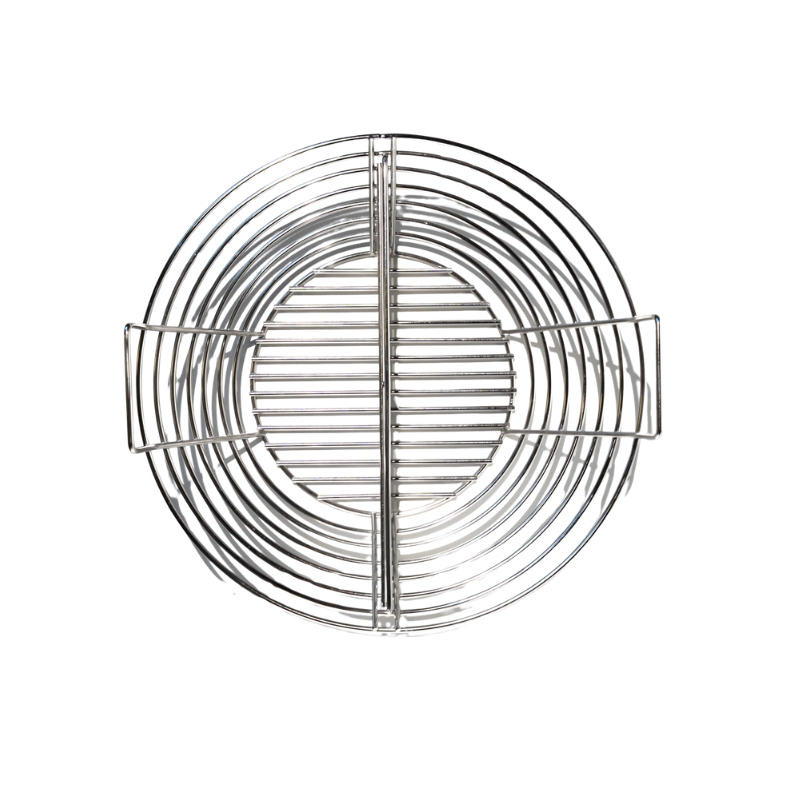
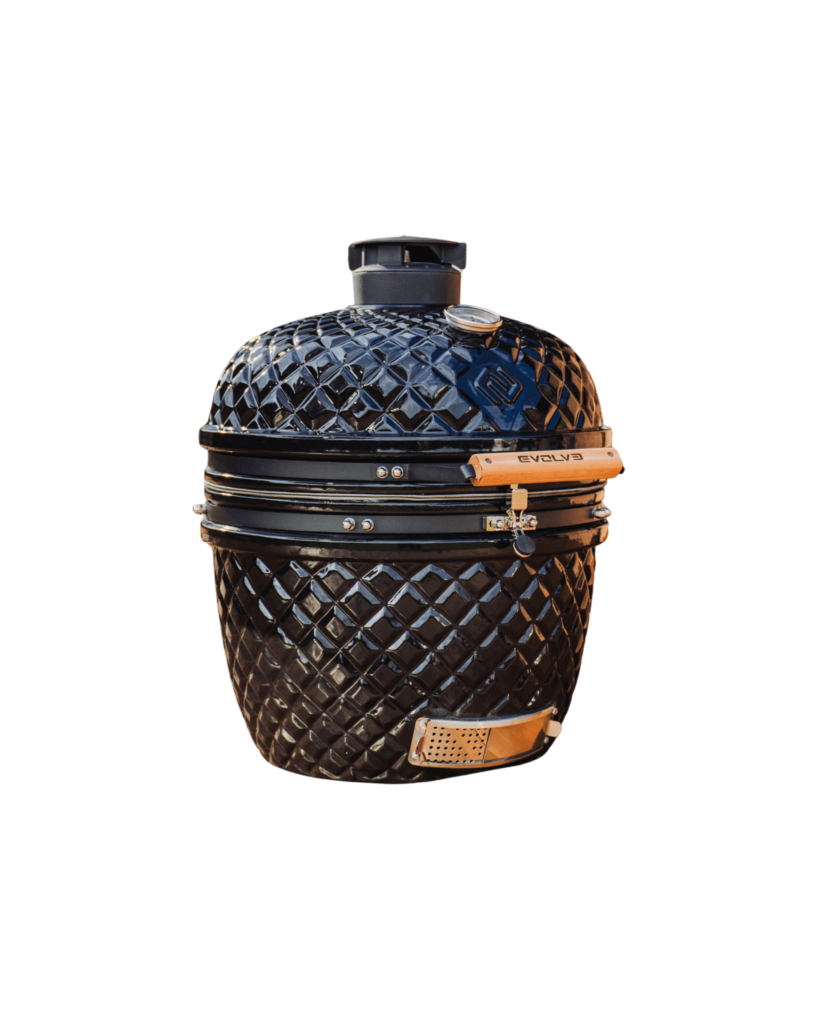
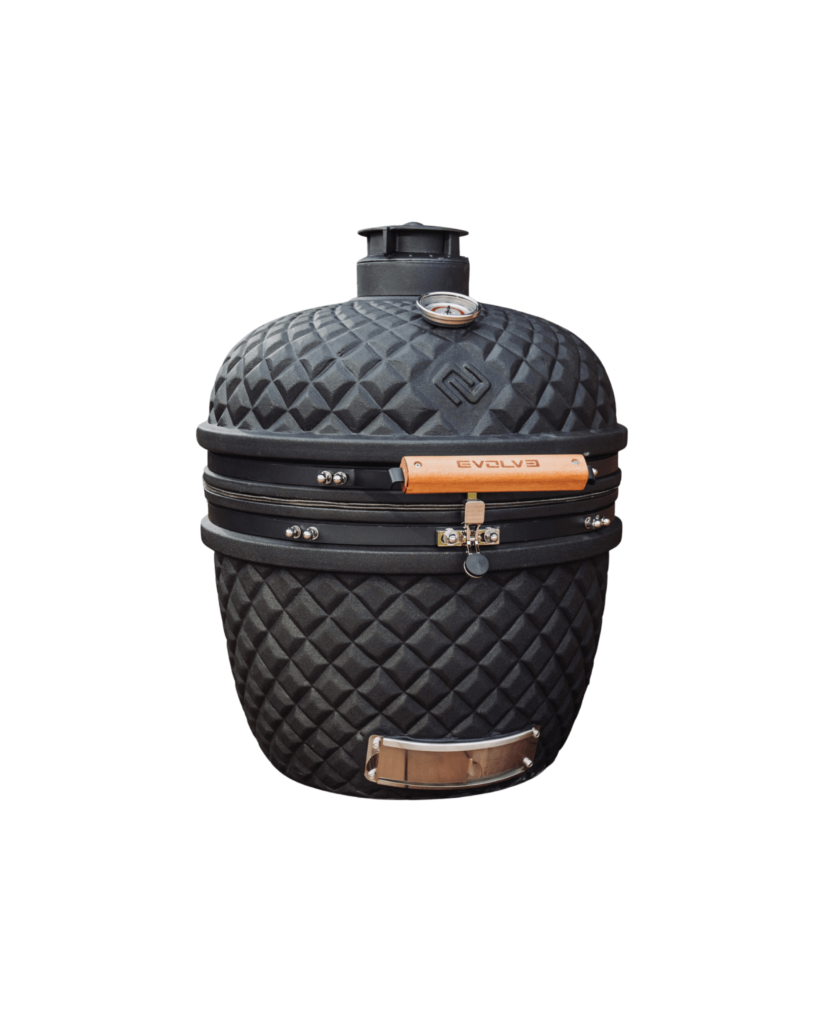
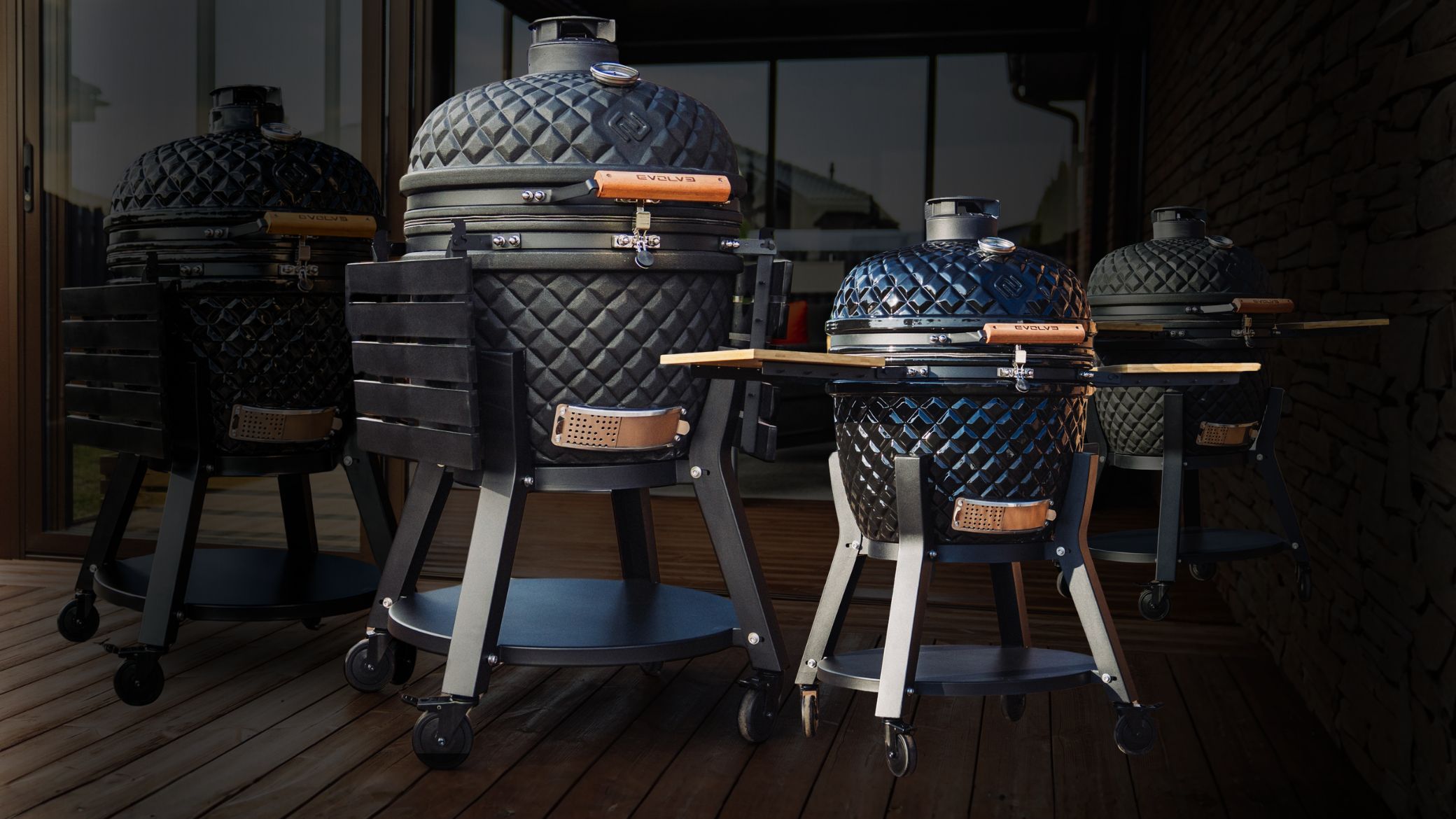
A charcoal basket keeps the coals together for the full cook and keeps the airway clear. More important still: open the lid as rarely as possible. Every peek costs about 15 minutes of cook time. A large, easy-to-read thermometer, like the one included with the Evolve Ultra Series, makes most of those peeks unnecessary.
Low & Slow in a Kamado: Why the Ceramic Makes the Difference
Over a twelve-hour cook, it’s not the recipe that decides the outcome — it’s consistency. A steel smoker needs regular refueling and reacts to every change in weather; the thick ceramic of a kamado buffers both away. A well-filled firebox at 110°C (230°F) carries through the night without trouble, with the temperature moving within a corridor of just a few degrees.
That changes how you work entirely. You set the grill, check it once after the first hour, and after that, low and slow in a kamado is genuinely what the name promises: slow and unhurried. Anyone cooking their first brisket should still build in some buffer time — meat holds safely warm in foil and a cooler for a good two hours.
For what actually happens to connective tissue during long cooking, see the Wikipedia article on collagen.
Frequently Asked Questions About Low & Slow
Do I need to watch the meat overnight?
No. With the lid closed and the vents set and stable, a kamado runs on its own without intervention. Set the grill up somewhere sheltered from wind and check once after the first hour — after that, in practice, nothing else changes.
What meat is best for a first attempt?
Pork shoulder. It forgives temperature swings, is inexpensive, and still turns out well even if you run it an hour too long. Brisket is the much more demanding exercise and shouldn’t be your first attempt.