
“Electric kamado grill” is searched far more often than the products that answer it actually exist, which tells you something: people want the convenience of electric with the performance of ceramic. Here is what is genuinely available and where the trade sits.
What is actually on the market
Three different things get called electric kamados, and they are not the same.
Electric ceramic grills. A ceramic body with a heating element instead of a firebox. They exist, mostly at smaller sizes, and they do hold temperature well because the ceramic still does its job. What they cannot do is make smoke.
Electric temperature controllers. A fan and probe that fit a normal charcoal kamado and hold a target temperature by regulating airflow. This is the category most people actually want when they search for electric — automation without losing the fire.
Electric starters. A looped element or hot-air wand that lights the charcoal in a couple of minutes without lighter fluid. Cheap, and it removes the part of charcoal cooking people dislike most.
What electric gives up
Smoke, mainly. The flavour in barbecue comes from combustion — burning charcoal and wood produce the aromatic compounds that settle on food over a long cook. An electric element produces heat and nothing else. Wood chip trays help, but the result is noticeably milder, and on a long cook the difference is not subtle.
High-temperature searing is the second gap. Charcoal in a sealed ceramic body will run past 350 °C comfortably; most electric elements top out well below that, which rules out proper pizza and limits the sear on a steak.
When electric is the right answer
When charcoal is not allowed. Plenty of apartment balconies and rented properties prohibit open fire, and in that situation an electric grill you can actually use beats a charcoal one you cannot.
When cooking time is the constraint. No lighting, no waiting for the coals to settle, no ash afterwards. If the realistic alternative is not cooking outdoors at all, that matters more than flavour purity.
The middle path most people want
If what you are after is not having to babysit the grill, the answer is usually a charcoal kamado with a temperature controller rather than an electric grill. The ceramic already does most of the stabilising — a full basket at 110 °C will hold for hours on its own — and a controller closes the remaining gap for overnight cooks.
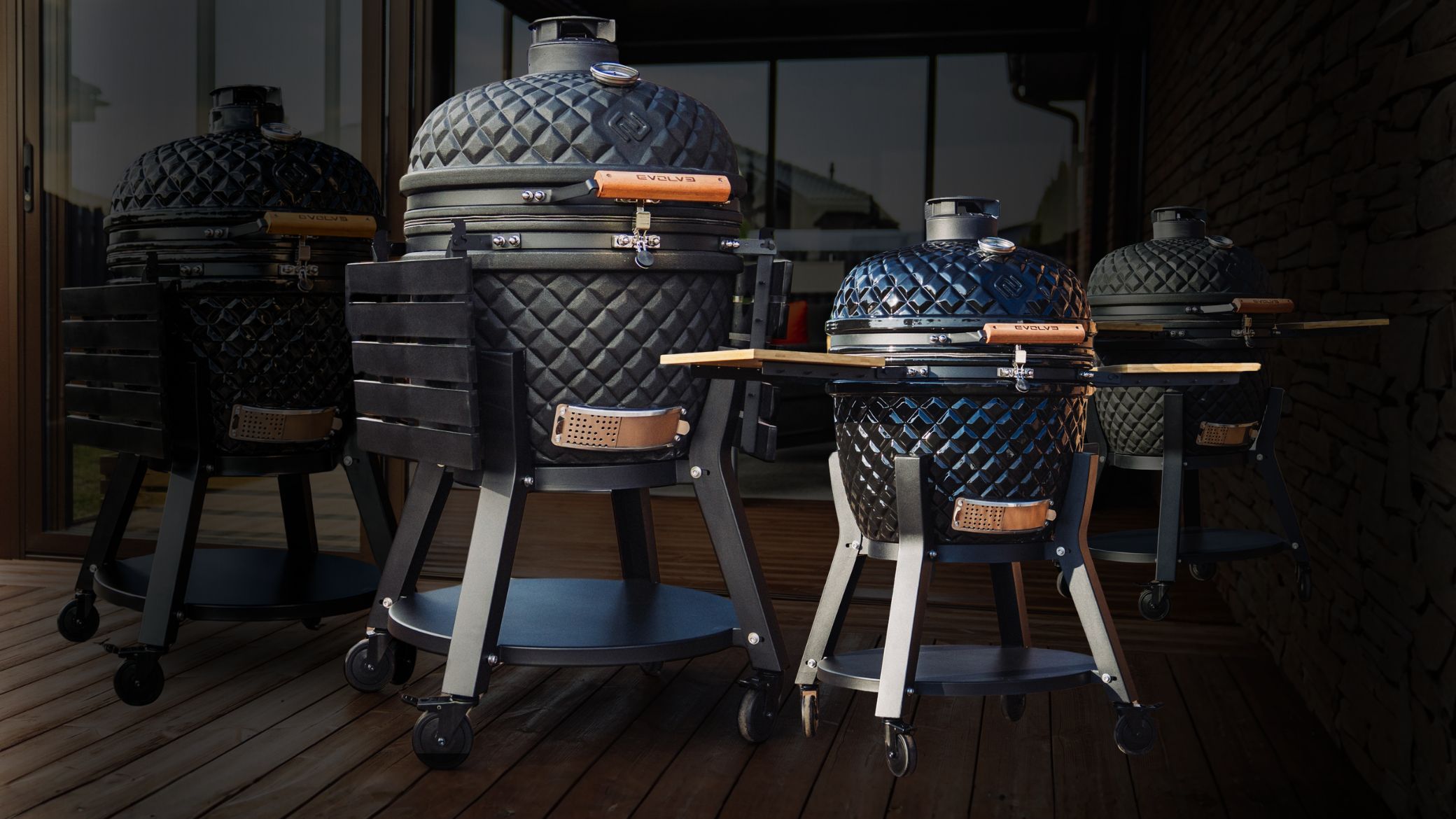
It is worth understanding how little supervision a ceramic grill needs before assuming you need electronics at all. Our guide to controlling kamado temperature covers what the two vents alone will do, and the Evolve range is charcoal throughout — because the smoke is the point.
Frequently asked questions
Do electric kamado grills exist?
Electric ceramic grills exist, and so do electric temperature controllers that bolt onto a charcoal kamado. What is rare is a true ceramic kamado with an electric element, because the heat source and the ceramic body solve different halves of the same problem.
Why would someone want an electric kamado?
Convenience and, in some cases, regulations. Balconies and apartment buildings sometimes prohibit charcoal, and electric removes lighting time and ash. What it also removes is the smoke, which is most of why people buy a kamado.
Can I add electric temperature control to a charcoal kamado?
Yes — a fan controller feeds measured air to the fire and holds a set temperature automatically. It is a genuinely useful addition for long overnight cooks, and it keeps the charcoal.
Is electric or charcoal better for smoking?
Charcoal, clearly. Smoke flavour comes from burning wood and charcoal, and an electric element does not produce it. Electric smokers compensate with wood chip trays, but the result is milder.