
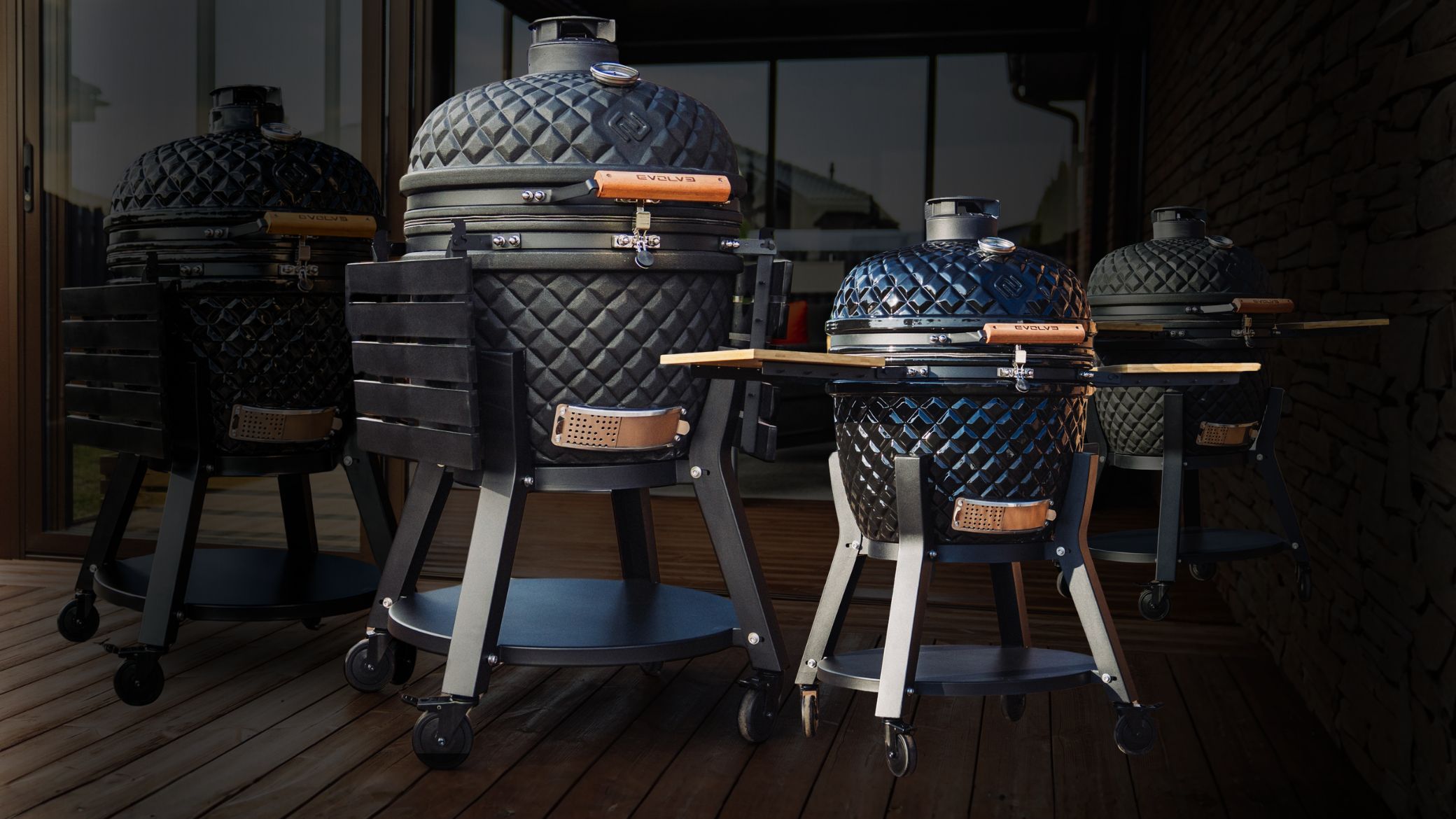
A kamado is a ceramic grill shaped like an egg. That is the whole description, and it is also why it behaves differently from every steel barbecue you have used.
The one thing that makes it different
The wall. A steel kettle has a thin skin that radiates heat outward as fast as the charcoal makes it, so the fire has to keep producing heat to replace what the grill is losing. Thick ceramic does the opposite: it absorbs the heat and holds it. Once a kamado is up to temperature, the walls themselves are the heat source, and the charcoal is only topping them up.
Everything people say about kamados follows from that. They use less fuel, because less heat escapes. They hold temperature for hours without attention, because the mass is doing the work. They recover quickly when you open the lid, because the stored heat is still there. And they reach and hold high temperatures, because a sealed ceramic body can.
What it actually cooks
Three jobs that would normally need three appliances.
Grilling. Direct over the coals at 250 to 300 °C. The ceramic keeps the grate hot when cold meat lands on it, so you get a sear rather than grey lines.
Smoking. Indirect at 110 to 130 °C for hours. This is where the kamado is genuinely hard to beat — set the vents, and a full basket of charcoal will hold that temperature for most of a day.
Baking. Up to 350 °C and beyond with a stone in place. Pizza, bread, anything that wants radiant heat from above and a hot surface below.
How the temperature is controlled
With air, not fuel. There is a vent at the bottom that lets air in and one at the top that lets it out, and the gap between them decides how hard the fire burns. Open both and the grill climbs; close them down and it settles.
The part that takes adjusting to is that it is slow and one-directional. Coming up in temperature is easy; coming back down means closing the vents and waiting, because the ceramic is still radiating everything it stored. The practical rule is to sneak up on your target rather than overshoot it.
What it costs and what you get
Ceramic grills start around EUR 749 for a full-size body and run past EUR 1,200 once the cart, tables and cooking accessories are included. That is more than a kettle and less than a dedicated smoker plus a pizza oven, which is the comparison that usually matters.
What you should check before the price is wall thickness, the gasket that seals the dome, and the warranty on the ceramic specifically. Those three decide whether the grill does what the category promises. The kamado buying guide goes through them in order.
Is it for you?
If you grill twice a summer, no. If you want one appliance that sears a steak on a weeknight and holds 110 °C for a Sunday brisket, that is exactly what a kamado is for — and why people who own one tend to stop using anything else. The range starts here.
Frequently asked questions
What does “kamado” mean?
It is the Japanese word for a traditional clay cooking vessel. The modern ceramic grill is descended from it, which is why the egg shape and the thick wall are common to every brand.
Is a kamado just an expensive barbecue?
It is a barbecue, a smoker and an oven in one body. If you only ever sear burgers, a kettle does that for far less. The case for a kamado is that it holds 110 °C for eight hours and 350 °C for pizza using the same grill.
Is a kamado hard to use?
It is different rather than difficult. Temperature is set with two vents and then left alone, which catches out people used to adjusting a gas dial. Most of the learning is in the first two or three cooks.
What can you cook on one?
Anything you would grill, plus anything you would smoke or bake. Steak at 300 °C, ribs at 110 °C, pizza at 350 °C on a stone, bread, whole chicken. The range is the point.