Why the pizza stone isn’t optional, what temperature actually works, and how to avoid a burnt base with raw toppings.
Pizza in a kamado comes together at 280–320°C (535–610°F), on a pizza stone that heats up from the start and sits above the heat deflectors. Four to six minutes, flip it once — that’s really all it takes once the setup is right.
A kamado is the best pizza oven most households will ever own — it reaches temperatures a kitchen oven simply can’t. But to get the result right, the setup and the order of operations both have to be correct.
Why the Stone Isn’t Optional
Without a stone, the base only gets its heat from the air. It cooks, but it doesn’t bake — the result is soft and pale. A glazed pizza stone stores heat and transfers it directly into the dough on contact. At the same time, it pulls moisture out of the base. Those two effects together are what create a crisp bottom.
Pizza in a Kamado: The Setup, Bottom to Top
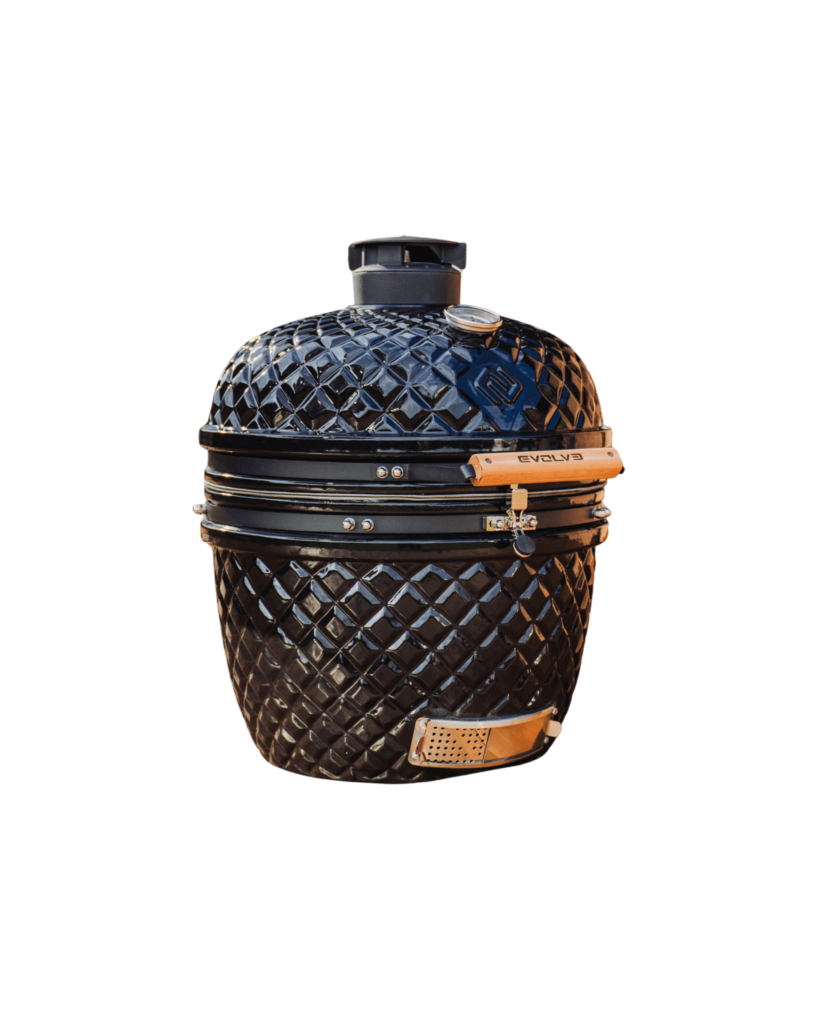
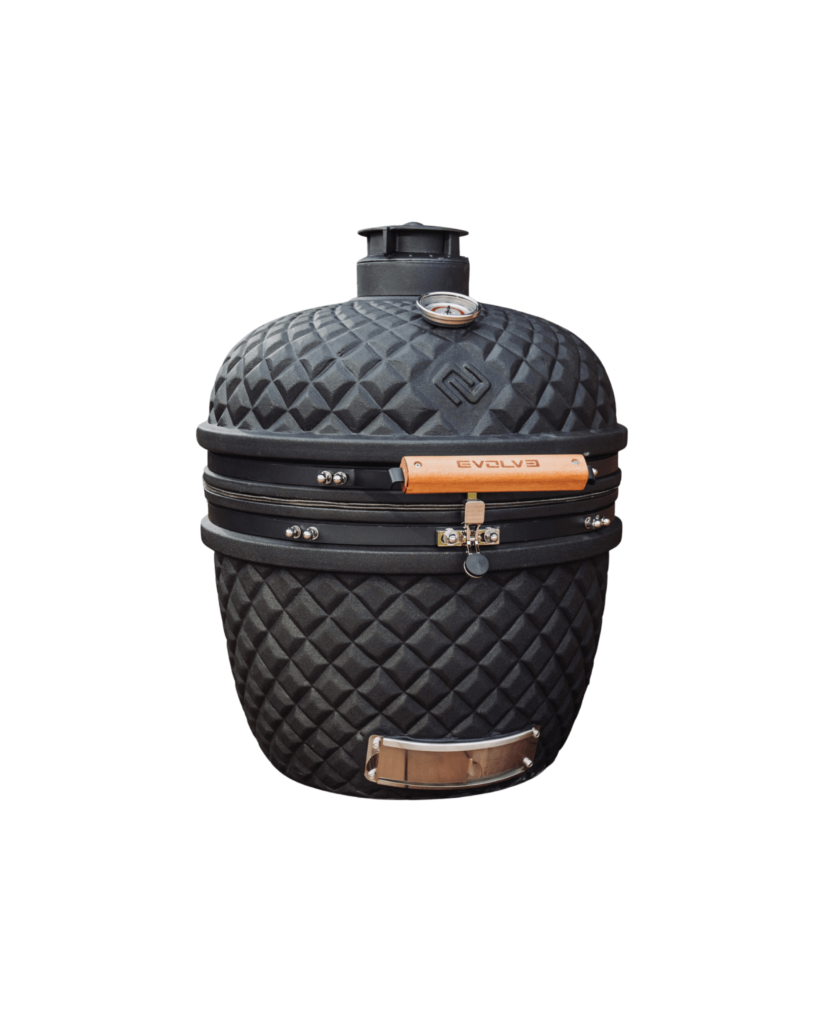
Coals, then the heat deflectors above them, then the grate, then the pizza stone on top. The deflectors are essential: without them, the stone sits directly over the flame and the base turns black before the cheese has melted. Leave space around the edges so heat can circulate up past the stone.
Pizza in a Kamado: Temperature and Preheating
280–320°C (535–610°F) is the right range for thin Neapolitan-style bases. For thicker, American-style bases, aim closer to 250°C (480°F), or the edge burns before the middle cooks through. What matters most: the stone has to heat up along with the grill and then hold that temperature for another 20 minutes. A stone that only goes in right before the pizza is cold — and a cold stone is worse than no stone at all.
Baking Times
At 300°C (570°F), a thin pizza is done in 4 to 6 minutes. Rotate it 180° halfway through, since the side facing the exhaust browns faster. Open the lid quickly when you do this, and close it again right away.
If the base still turns out pale, it’s almost never about timing — it’s about the stone’s temperature. A stone that’s only been in for 10 minutes hasn’t reached surface temperature yet, even if the thermometer in the lid already reads 300°C — it’s measuring the air, not the stone. Give it the full 20 minutes, and treat your first pizza as a deliberate test run.
The Three Most Common Mistakes
- Too many toppings. Moisture is the enemy of a crisp base. Spread the sauce thin, and drain the mozzarella beforehand.
- Stone placed in too late. It needs the same preheat time as the grill itself.
- Lid opened too often. Every opening costs heat that the ceramic then has to rebuild.
Not Just Pizza
The same setup bakes bread, focaccia, and flammkuchen. For bread, drop to 230°C (445°F) and keep the lid closed — the moisture inside the cooking chamber builds a crust that’s hard to get in a kitchen oven without steam. You’ll find the matching accessories in Kamado Accessories.
Pizza in a Kamado: Dough, Heat, and Timing
The grill is rarely the problem in this discipline — the dough is. A long, cold-fermented dough handles high heat far better than one made quickly: it browns more evenly and puffs up airy at the edge instead of turning hard. So plan the fermentation before you light the kamado, not the other way around.
For timing, a simple order helps: bring the grill and stone up to temperature, let it soak for 20 minutes, then put the first pizza on. Experience shows the first one is usually the worst — it pulls heat from the stone that has to rebuild before the second. Treat it as a test run and no one minds.
For the classic method and the temperatures used by the Neapolitan tradition, the Wikipedia article on pizza has the background.
Frequently Asked Questions About Pizza
Why does the pizza stick to the peel?
Almost always too much moisture or too long a wait before sliding it in. Add toppings right before it goes into the oven, and use semolina instead of flour underneath — it acts like ball bearings and doesn’t burn as fast.
How do I get a puffier crust?
It’s about the dough, not the grill: a longer cold ferment, higher hydration, and leaving the outer centimeter untouched when you shape it. At 300°C (570°F), that edge puffs up within the first 60 seconds.