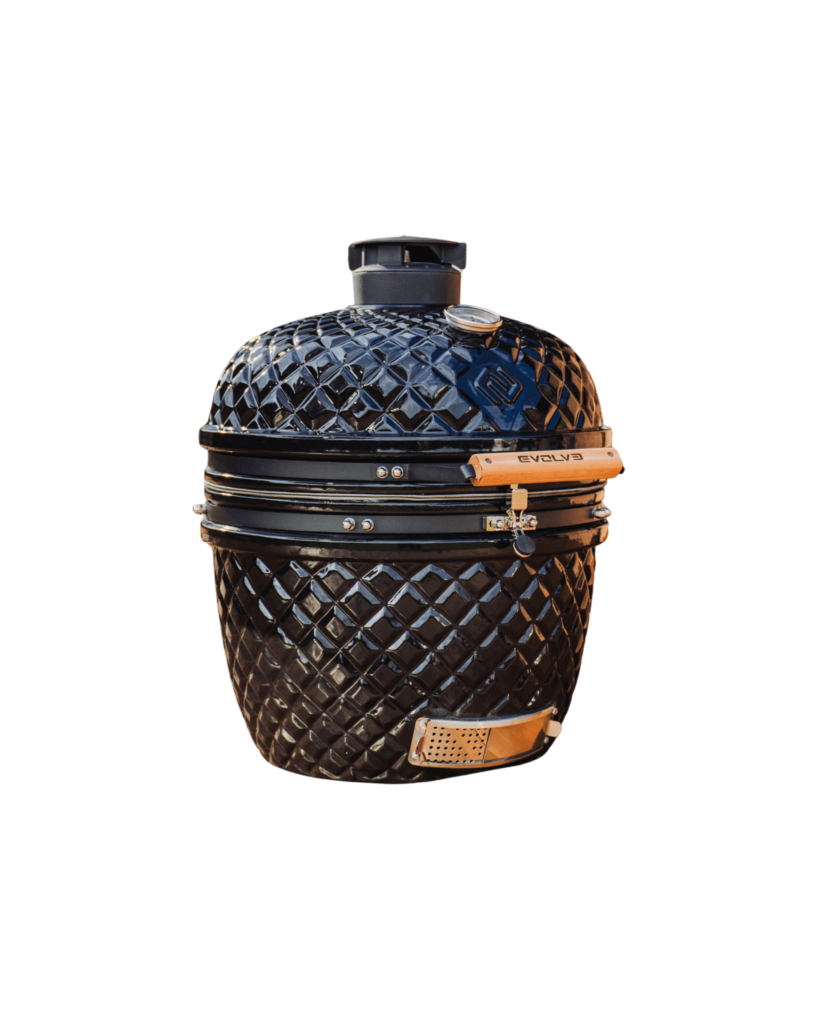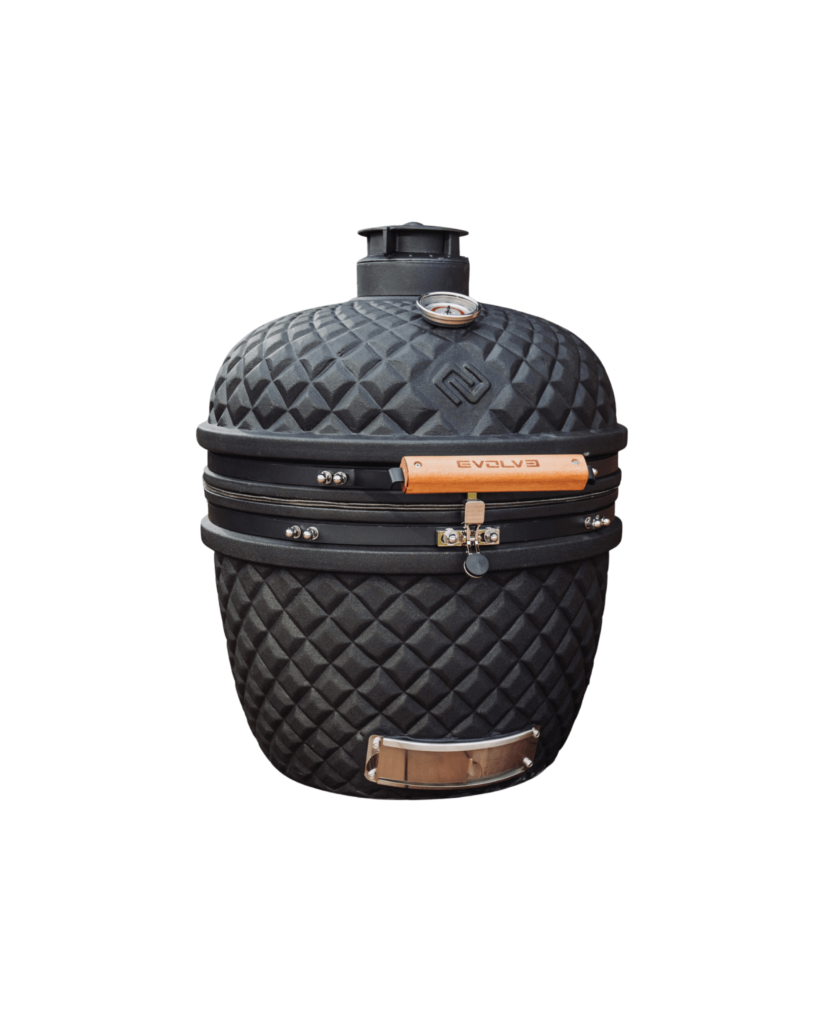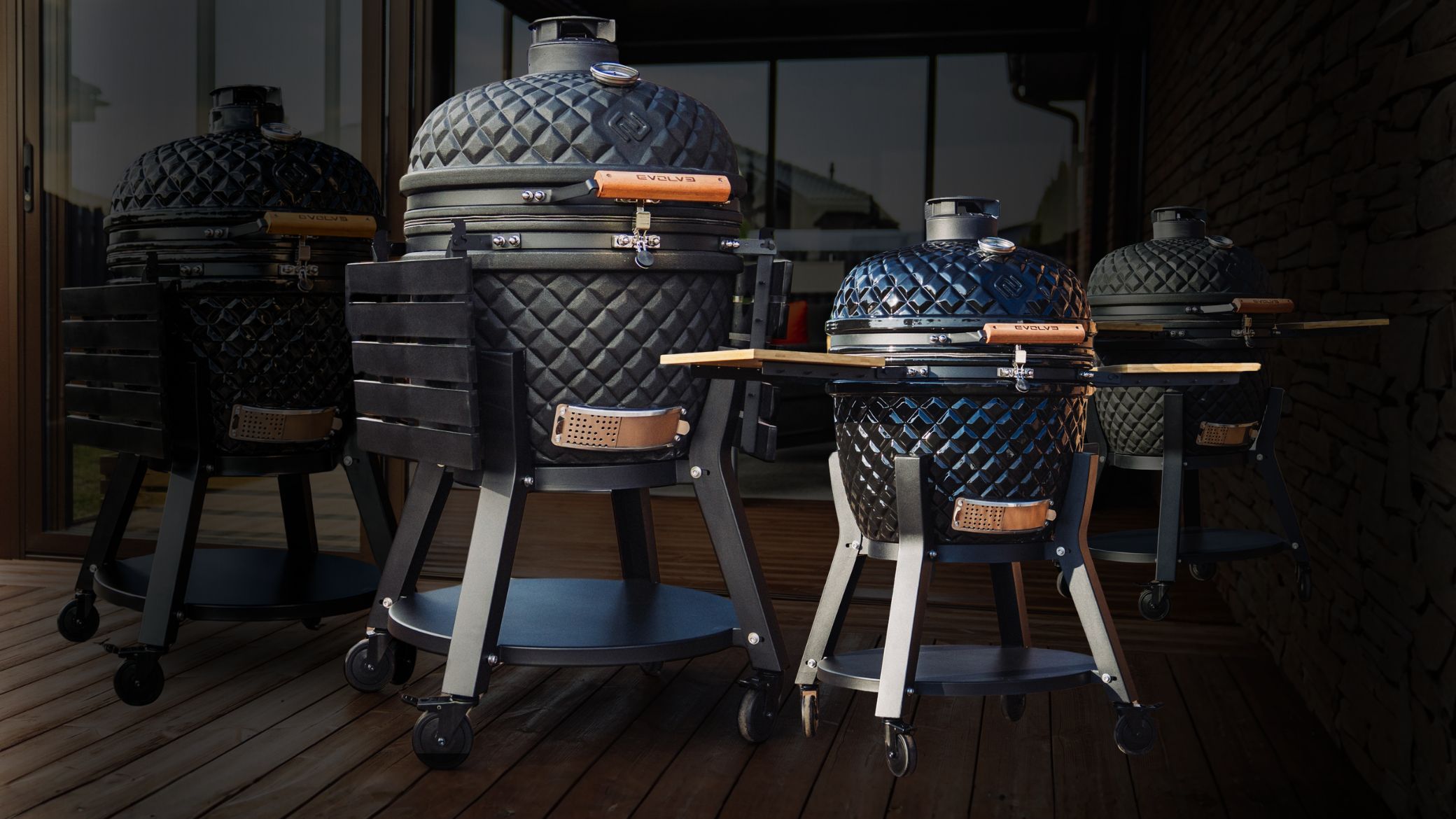
Ceramic thickness, grate diameter, gasket, airflow, and warranty — these are the five points where a good kamado grill parts ways with a cheap one.
Buying a kamado grill: what should you actually look at? Five things, in this order — ceramic thickness, grate diameter, the gasket and hinge, airflow, and the warranty. Everything else is accessories you can add later.
A kamado grill is a purchase meant to last ten years or more. That makes a bad choice all the more frustrating — and the differences between models don’t show up in a product photo. These five points decide whether you’ll actually be happy with the grill.
1. Ceramic Thickness
The ceramic wall is the whole reason to buy a kamado in the first place. It stores heat instead of losing it outward, which is what makes stable temperatures over many hours possible at all. A thin wall cools down faster, reacts more to wind and outdoor temperature, and forces you to keep adjusting it. Also check that the glaze is described as resistant to thermal shock and cracking — that’s exactly where cheap units fail first.
One practical check almost nobody thinks to make: ask whether the firebox is a single piece or built in two parts. A one-piece firebox cracks under thermal stress across its full height and then has to be replaced entirely. A two-piece firebox — like the one in the Evolve Ultra Series — absorbs that stress at the seam, so if something does crack, you replace one half.
2. Grate Diameter
The diameter decides how much fits on the grill at once and, more importantly, how much surface sits outside the direct coals. Indirect cooking needs that outer zone. The Evolve Ultra Series works with a 51 cm (20 in) grate, roughly 8–21% larger than most comparable kamados. The difference sounds small, but in practice it’s the gap between two courses and three in a single session.
What Size Fits Your Household?
Don’t think in terms of people — think in terms of what needs to fit on the grate at once. As a rule of thumb for a 51 cm grate:
- Two to four people — plenty of room, with space left over for vegetables or a second dish alongside the main.
- Six to eight people — doable in one round. This is exactly where the extra centimeters pay off.
- Ten or more — possible in two rounds, or one round using a second, raised grate. For regularly feeding a large crowd, a kamado isn’t the most practical tool; a long grill suits that better.
Don’t underestimate the outer zone. With low-and-slow cooking, the meat sits specifically away from the coals, which makes the usable surface smaller than the diameter alone suggests. We run the numbers on whether a 51 cm grate is enough when you’re hosting guests in more detail elsewhere.
3. Gasket and Hinge
A kamado controls its temperature through airflow. That only works if the lid closes tightly — a leaky gasket makes every fine adjustment pointless. Fiberglass is the durable standard here: fire-, melt-, and mold-resistant. The second point is the hinge. A ceramic lid is genuinely heavy; a hover hinge takes on that weight so the lid lifts with one finger and doesn’t slam shut when you let go.
4. Airflow
You need two adjustment points: a coarse one at the bottom for intake, a fine one at the top for exhaust. What happens after you’re done cooking matters too. On a well-built kamado, the coals smother themselves as soon as both vents are closed — the unused charcoal stays put for next time instead of burning away completely. Over the years, that’s a noticeable difference in charcoal use.
That smothering-and-reusing feature is also the answer to the running-cost question. You cook with less charcoal than on a comparable steel grill, and whatever doesn’t burn, you keep. For how to control everything from low-and-slow to 350°C (660°F), see Controlling Kamado Temperature.
5. Warranty and Spare Parts
Ceramic doesn’t rust and doesn’t burn through, which is why a long warranty on this type of grill isn’t a marketing line — it’s simply the logical result of how it’s built. Evolve backs the ceramic — base and dome — with a limited lifetime warranty for the original owner; normal wear isn’t covered. Beyond that, ask specifically about wear parts: the gasket and heat deflectors are the components you might need to replace once in ten years. A manufacturer with no answer to that question is selling you a grill built to last three.
Technical Specs at a Glance
The hard numbers for the Ultra Series, for a direct comparison with other models:
| Feature | Evolve Ultra Series |
|---|---|
| Grate diameter | 51 cm (20 in) |
| Weight | approx. 96 kg (212 lb) |
| Dimensions | 60 × 60 cm (23.6 × 23.6 in) |
| Gasket | Fiberglass — fire-, melt-, and mold-resistant |
| Firebox | Two-piece |
| Heat deflectors | Glazed, thermal-shock resistant |
| Grate system | Two zones — direct and indirect at once |
| Hinge | Hover hinge with lock |
| Included | Rain cover, LED handle, accessory holder, thermometer |
| Warranty | Limited lifetime on ceramic, original owner |
What Does a Good Kamado Grill Cost?
Serious ceramic quality starts at around €750. Below that, manufacturers cut corners on wall thickness, gasket, or glaze — exactly the three things you can’t fix later. The Ultra Series comes in four tiers:
| Tier | The Beauty | The Beast | What’s included |
|---|---|---|---|
| Solo kamado | €749 | €799 | The grill, no base |
| + Side tables and cart | €949 | €999 | Mobile, with worktop |
| Easy Clean set | €999 | €1,099 | Plus the pull-out ash drawer |
| Chef Combo | €1,199 | €1,249 | Everything, plus the full accessory package |
The price difference between the two models is purely cosmetic: The Beauty is high-gloss with a diamond pattern, The Beast is matte with an urban look. Ceramic, grate, airflow, and warranty are identical. Both are shown side by side in The Beast or The Beauty.
How to Buy a Kamado Grill: Solo or Set?
If you already have a stable, heat-safe base, the solo kamado is enough. In every other case, the set is the better value, since buying the cart separately later costs more. If you already know you’ll want the pizza stone and cast-iron grates, a Chef’s Set works out cheapest. Individual pieces are available in Kamado Accessories.
The Chef Combo includes the cast-iron grates, the glazed pizza stone, the BBQ tool set, heat-resistant gloves, and the Easy Clean ash drawer. After setup, all that’s missing is the charcoal. What the ash drawer means in practice: you pull the ash out instead of scraping it from the firebox — the difference between five minutes and half an hour. The full breakdown is in Kamado Set or Solo.
Which Accessories Do You Actually Need?
Not everything has to come with it right away. In order of importance:
- Right away: a base or a sturdy table, and the heat deflector if it isn’t included. Without a deflector you can’t cook indirectly — and that’s half of what you buy a kamado for.
- Within the first month: heat-resistant gloves and an ash spade or ash drawer. Both are about safety and about how often you’ll actually light the grill.
- If you’ll actually use them: pizza stone and cast-iron grates. Fine to buy later — unless you’re already leaning toward the set, in which case the bundle is cheaper.
- Rarely needed: a second, raised grate, unless you regularly cook for eight or more.
Ceramic Grill or Gas Grill?
Honestly: if you mostly grill quickly on weeknights and rarely for more than an hour, a gas grill is the more sensible choice. A kamado takes twenty to thirty minutes to reach temperature, and that becomes a hurdle if it’s only ever used for sausages.
The kamado wins as soon as you want more than grilling: smoking at 110°C (230°F), pizza at 350°C (660°F), or a piece of meat that needs to hold temperature for eight hours without you standing over it. Neither a gas grill nor an open charcoal grill can do all of that. The full comparison is in Ceramic Grill vs. Gas Grill.
Where Evolve Is the Right Choice — and Where It Isn’t
An honest answer serves you better than a sales pitch. Brands like Big Green Egg, Kamado Joe, and Monolith have been around longer, with a wider dealer network and a broader ecosystem of third-party accessories. If in five years you want to choose from dozens of add-ons across different manufacturers, or you want to see and touch the grill in a showroom before buying, those brands have the edge.
Evolve is the better choice if you buy by spec sheet: a 51 cm grate in a price range where 45–47 cm is more typical, plus a two-piece firebox, fiberglass gasket, and hover hinge, with a full setup under €1,250. So compare on the five points above rather than the brand name — and weigh the price against the tier, not against the brand.
Setup, Delivery, and First Use
A kamado weighs around 96 kg (212 lb) and arrives by freight on a pallet, not as a parcel. Plan for a second person and think through the path to where it’ll sit: a ceramic grill isn’t carried, but it rolls fine on its cart.
As for the spot itself: stone, concrete, or tile are all fine. On a wooden deck, put a heat-resistant pad under the cart. The outside of a kamado stays warm to the touch — the real risk is falling embers when you add charcoal, not the wall itself. Also keep some distance from wooden fences and overhangs, since heat rises.
Before you cook for real the first time, season the grill: heat it up slowly to around 150°C (300°F) so the glaze and gasket settle in, rather than going straight to full heat. The full step-by-step is in Seasoning a Kamado.
Care and Lifespan
Upkeep is minimal, and that’s one of the reasons ceramic lasts so long. Empty the ash before lighting, burn off the grates occasionally at high heat, and check the gasket once a season for hard spots or looseness. That’s really all there is to it. One thing you should specifically not do: scrub the inside with dish soap — the patina in there is doing a job.
The grill can stay outside all year round — ceramic is frost-resistant, and a rain cover comes with every model. Just take the ash out before winter, and only cover it once the grill is fully cooled and dry. See Cleaning and Maintaining a Kamado and Winterizing a Kamado.
How to Buy a Kamado Grill: Getting the Priorities Right
If you can only check one thing, check the gasket and the hinge. Ceramic thickness and grate size are on the spec sheet and easy to compare; whether a lid still closes tight after two years comes down to components almost nobody writes about. A kamado that pulls in stray air can’t be fine-tuned anymore — and that erases the exact advantage you bought it for.
Next comes the question of the base, which most people only ask after delivery. A ceramic grill weighs around 96 kg (212 lb) and needs a heat-safe, load-bearing stand. Buy the cart separately later and you’ll pay more than as part of a set — so it’s worth deciding this before you order, not after.
You’ll find the full Kamado Collection here when you’re ready. For a neutral overview of the design and history of this grill type, see the Wikipedia entry on the kamado.
How to Buy a Kamado Grill: Frequently Asked Questions
How long does delivery of a kamado take?
Expect freight delivery on a pallet, not parcel shipping: a kamado weighs around 96 kg (212 lb) and arrives on a pallet. Plan for a second person to help unload it and move it to where it’ll sit — a ceramic grill isn’t something you carry.
Do I need a fireproof base?
Not on stone, concrete, or tile. On a wooden deck, put a heat-resistant pad under the cart: the kamado itself stays warm to the touch on the outside, but falling embers when you add charcoal are the real risk.
How much charcoal does a kamado use?
Less than a steel grill of the same size, and whatever doesn’t burn stays usable. Close both vents after grilling and the embers smother themselves — so you reuse the leftover charcoal next time.
Isn’t €749 a lot for a grill?
For a ceramic grill, that’s the entry point into the serious tier, not the top end. Think in terms of lifespan: ceramic doesn’t rust and doesn’t burn through, and the base and dome carry a limited lifetime warranty for the original owner. A €300 steel grill, over the same period, you’d typically replace twice.
Can I add to it later if I buy the solo now?
Yes — side tables, the rolling cart, the pizza stone, and cast-iron grates are all available separately. Just keep in mind that buying them one at a time costs more than getting them as part of a set. If you already know you’ll want them, get the set now.